Launching 23rd September
Liorah Tchiprout
No items found.
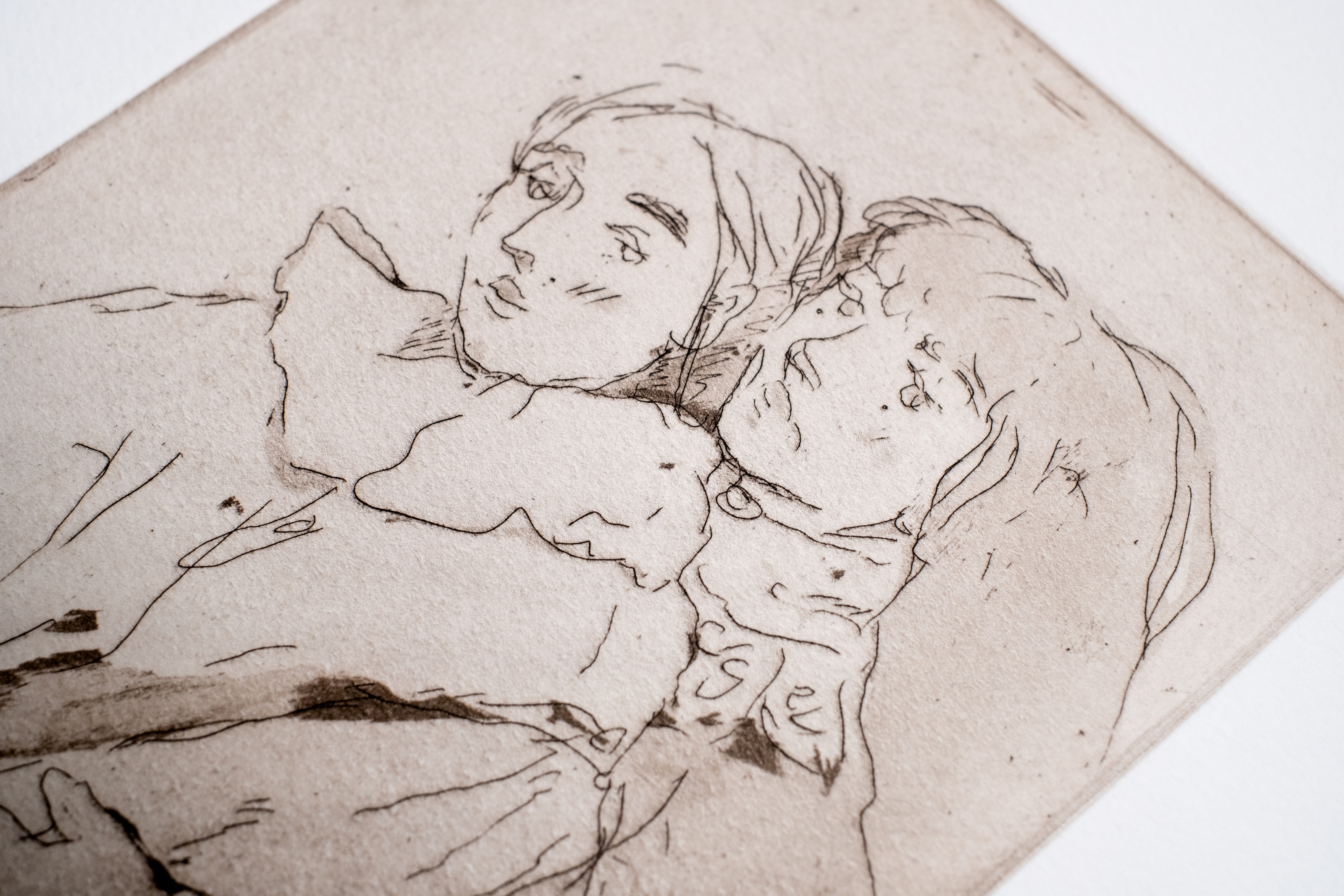
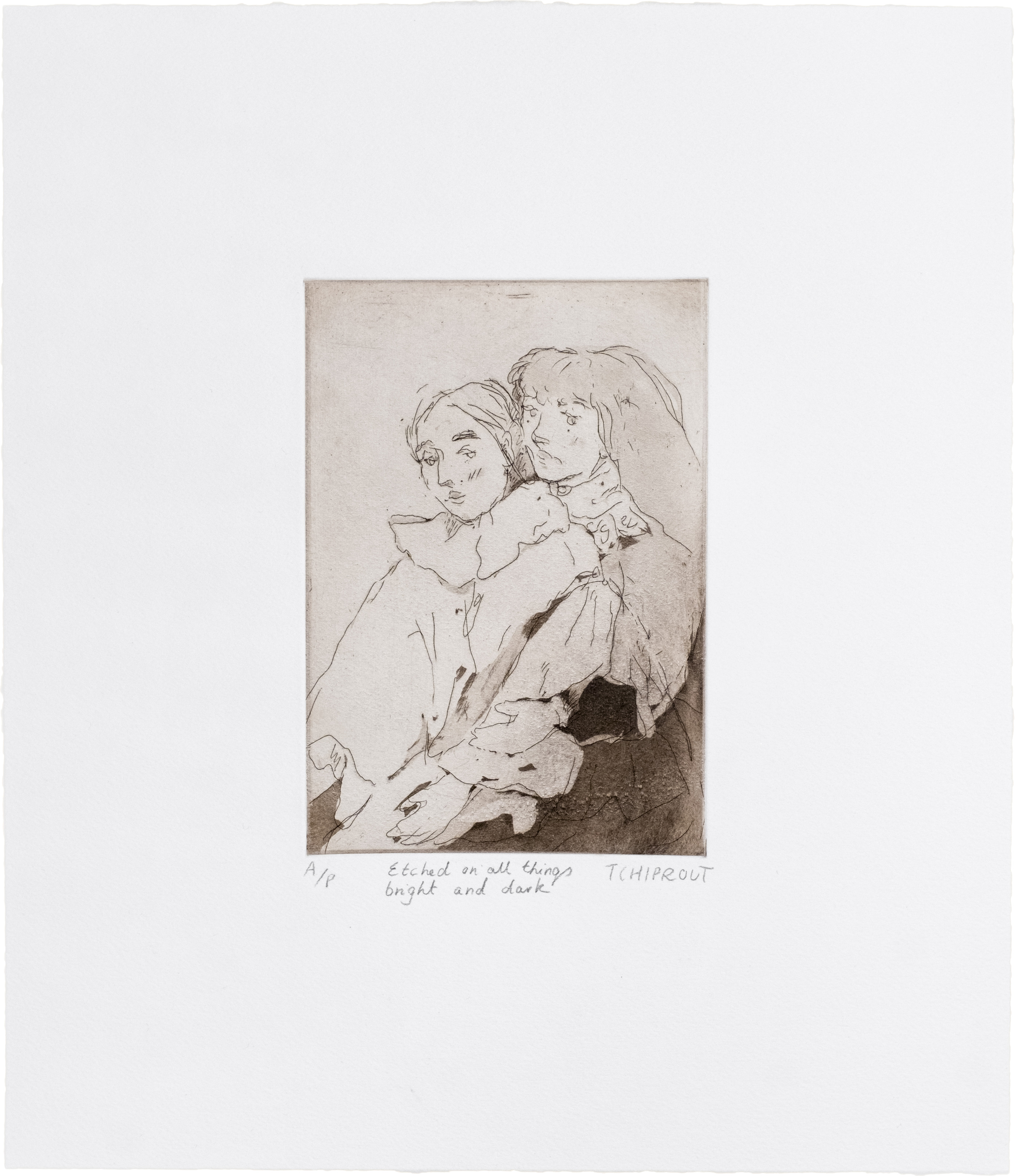
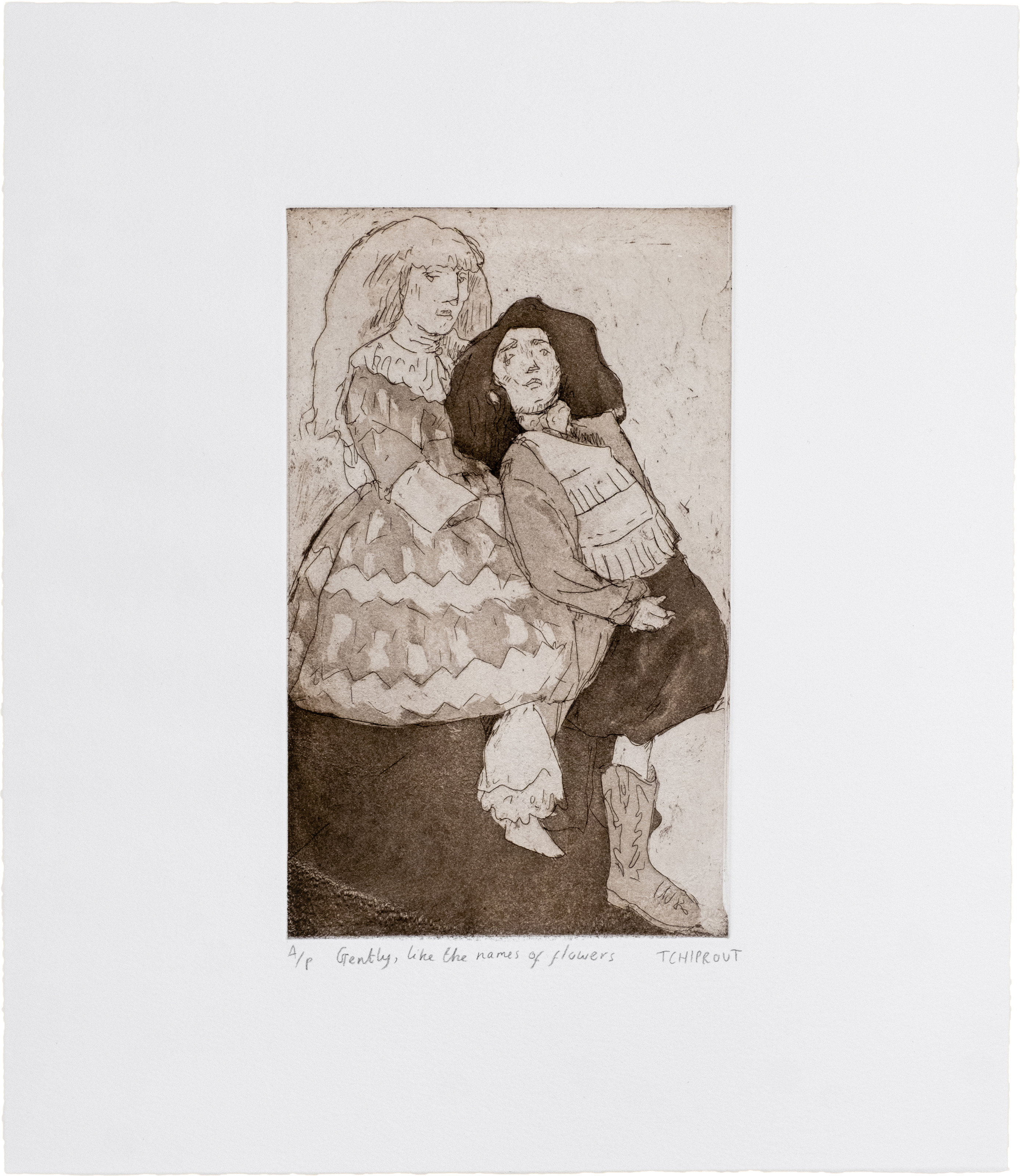
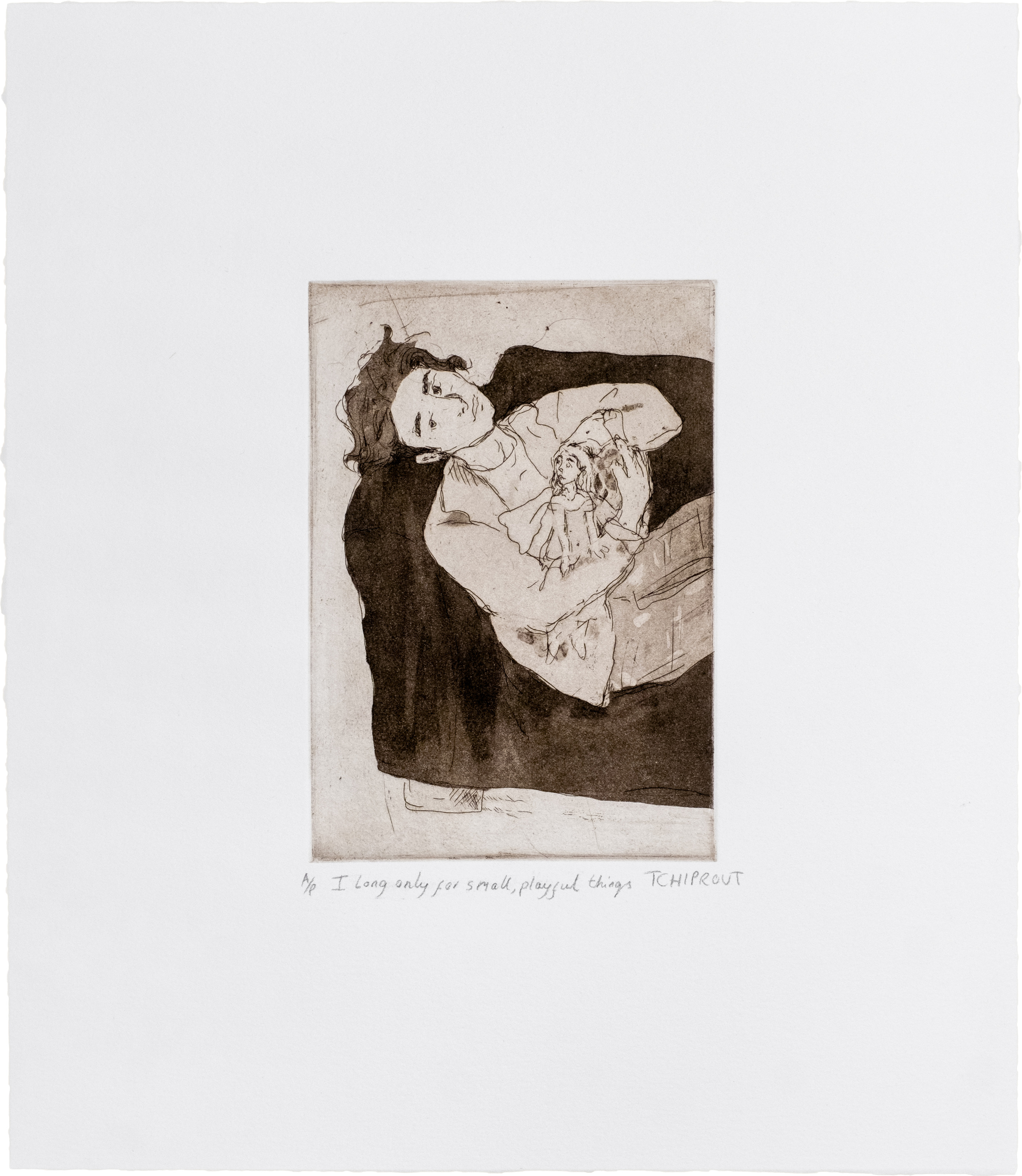
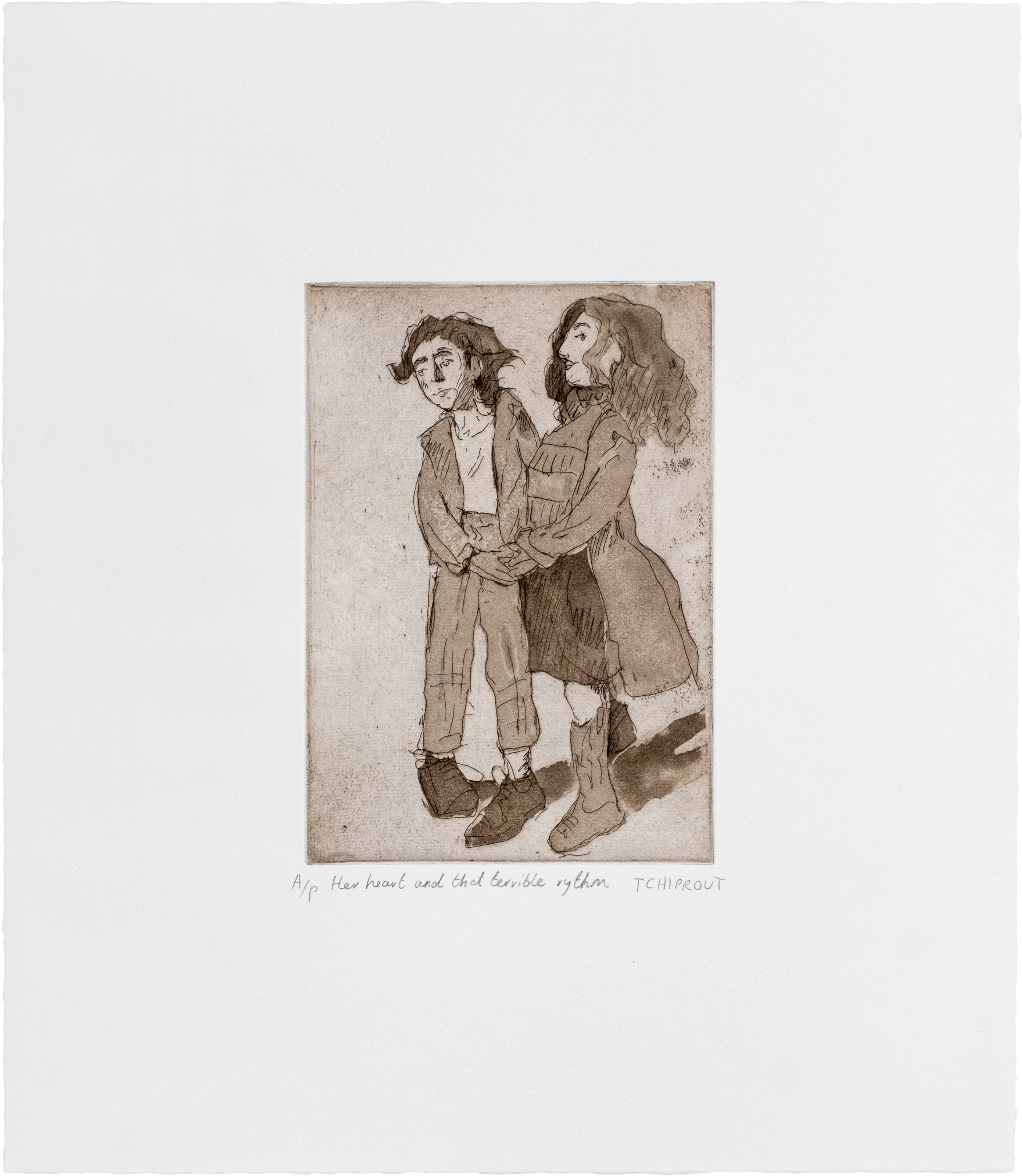
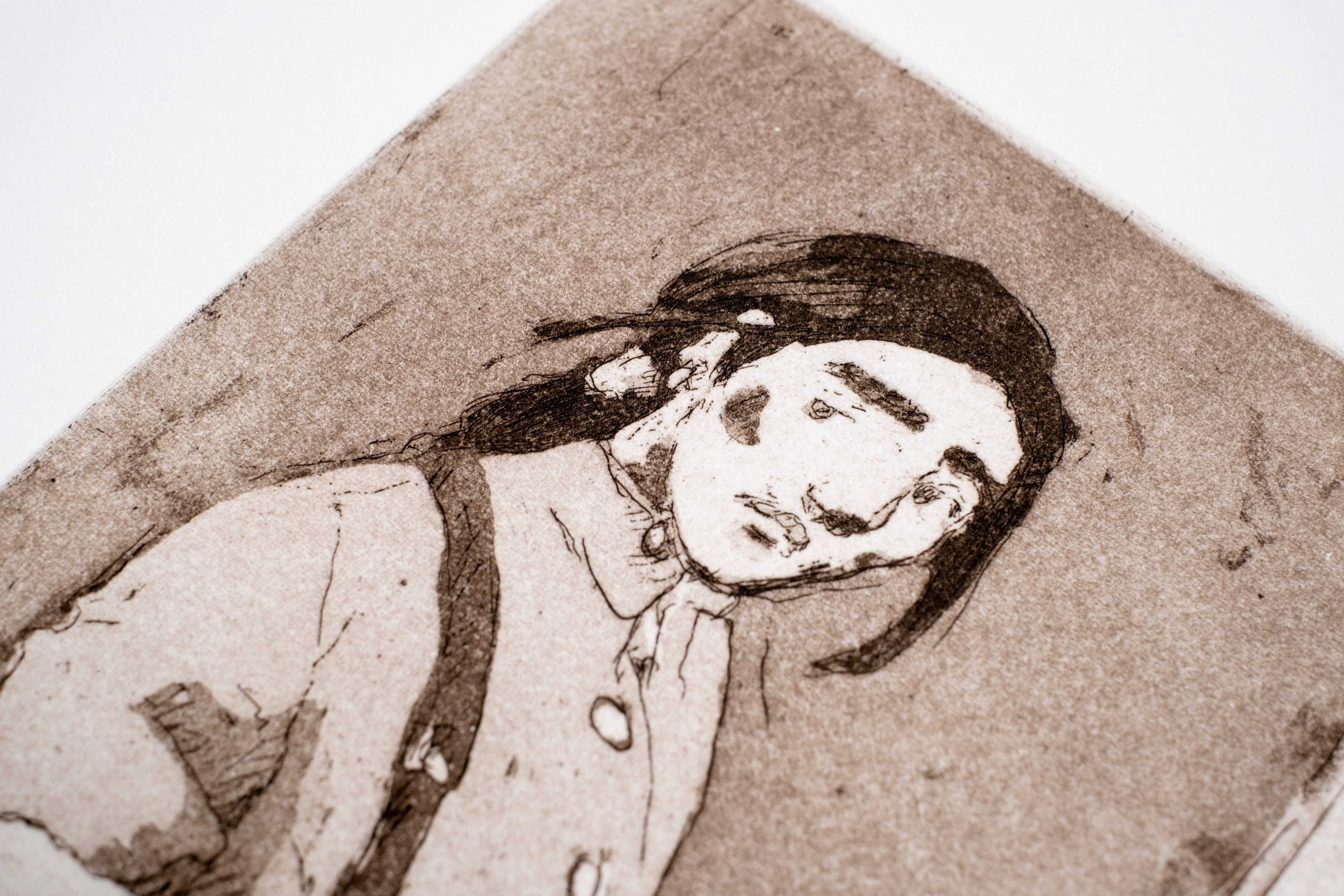
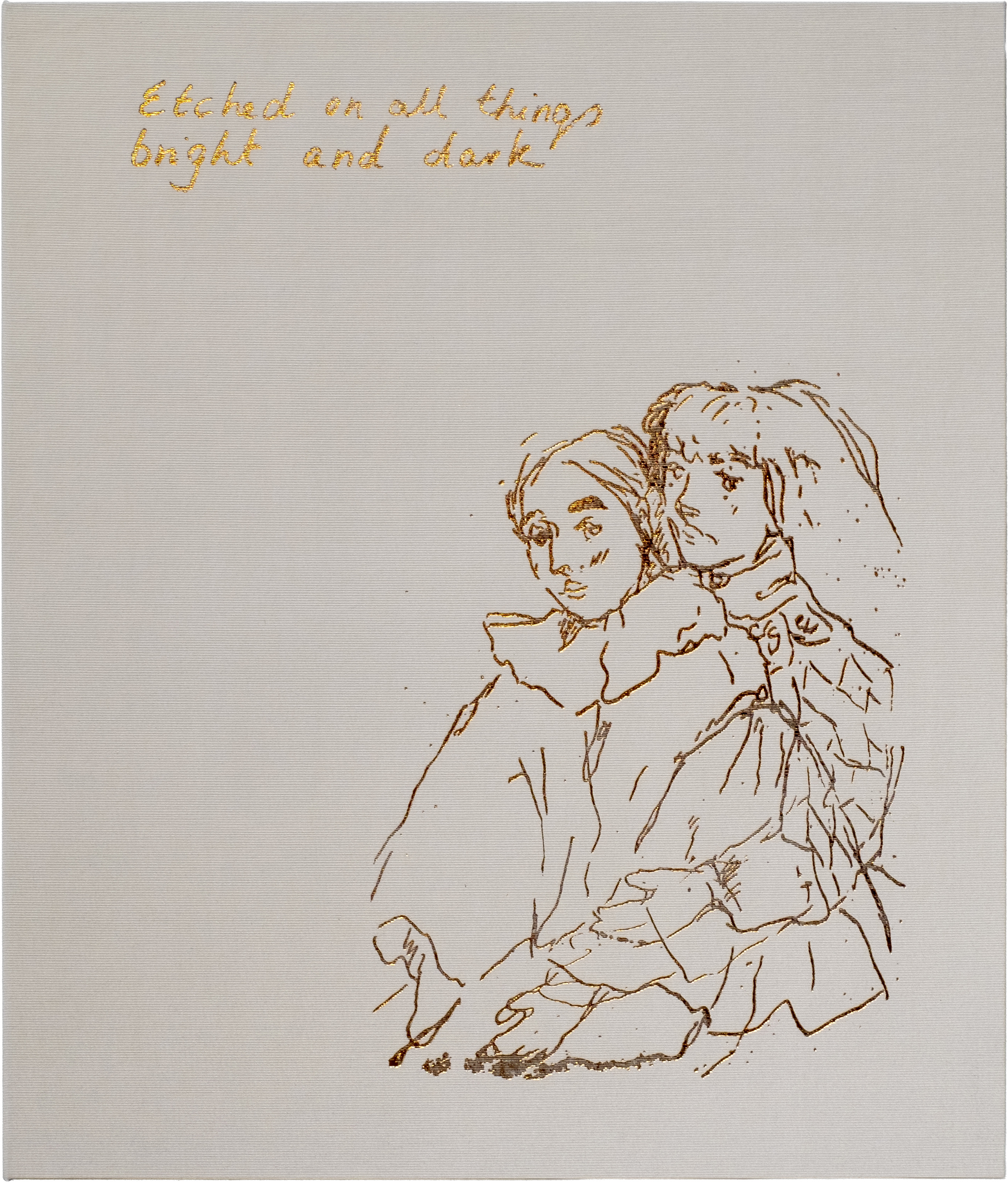
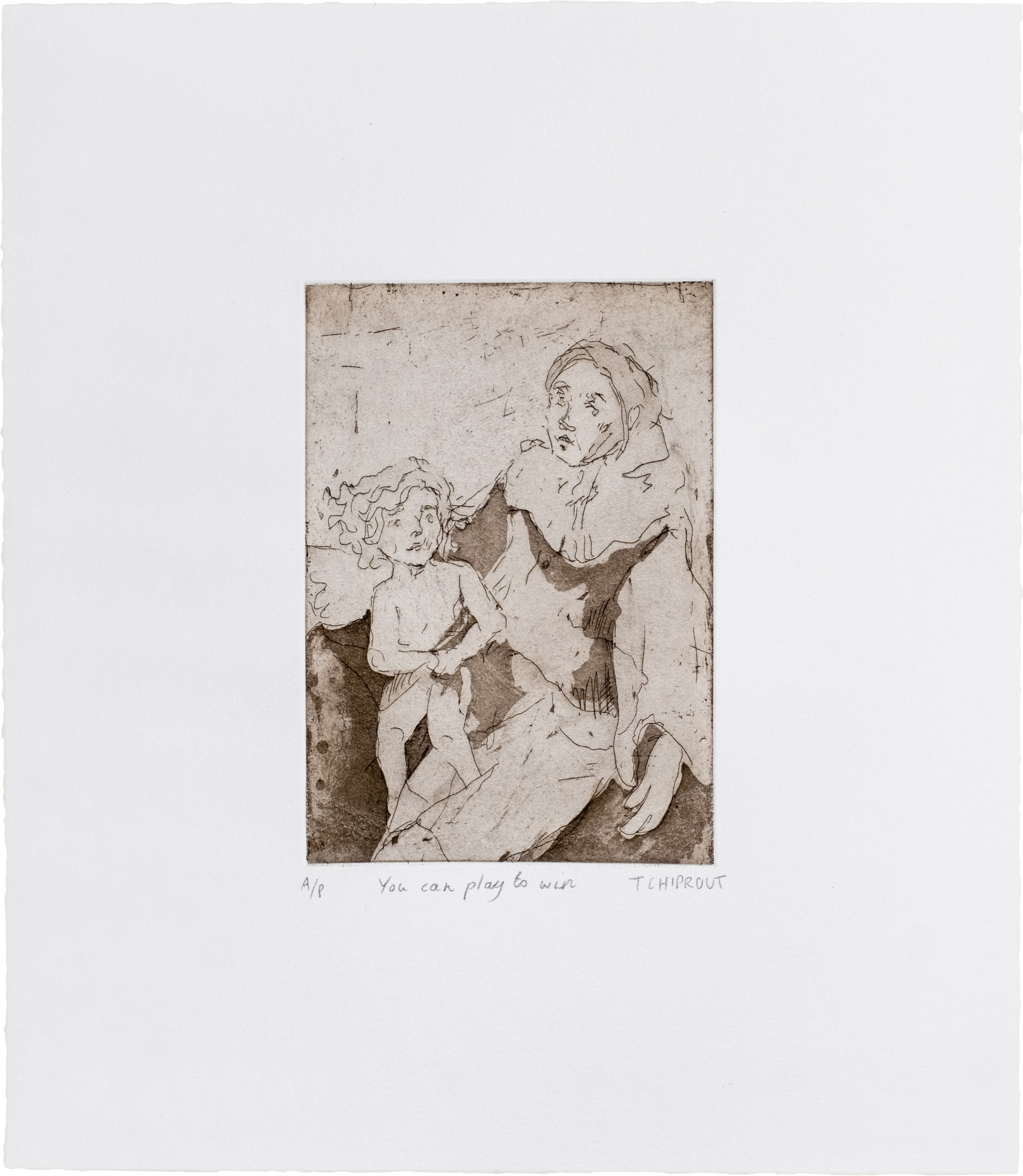
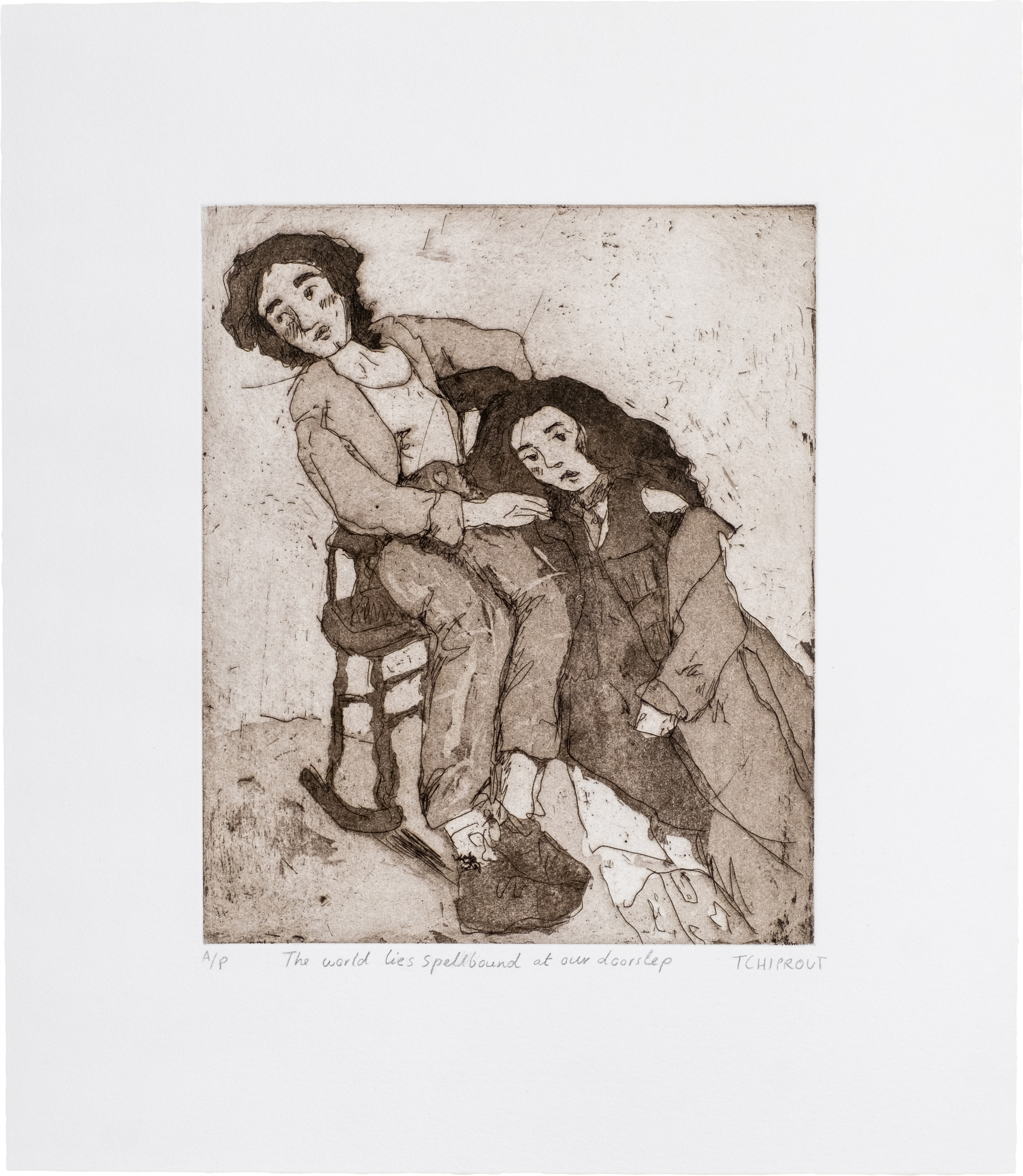
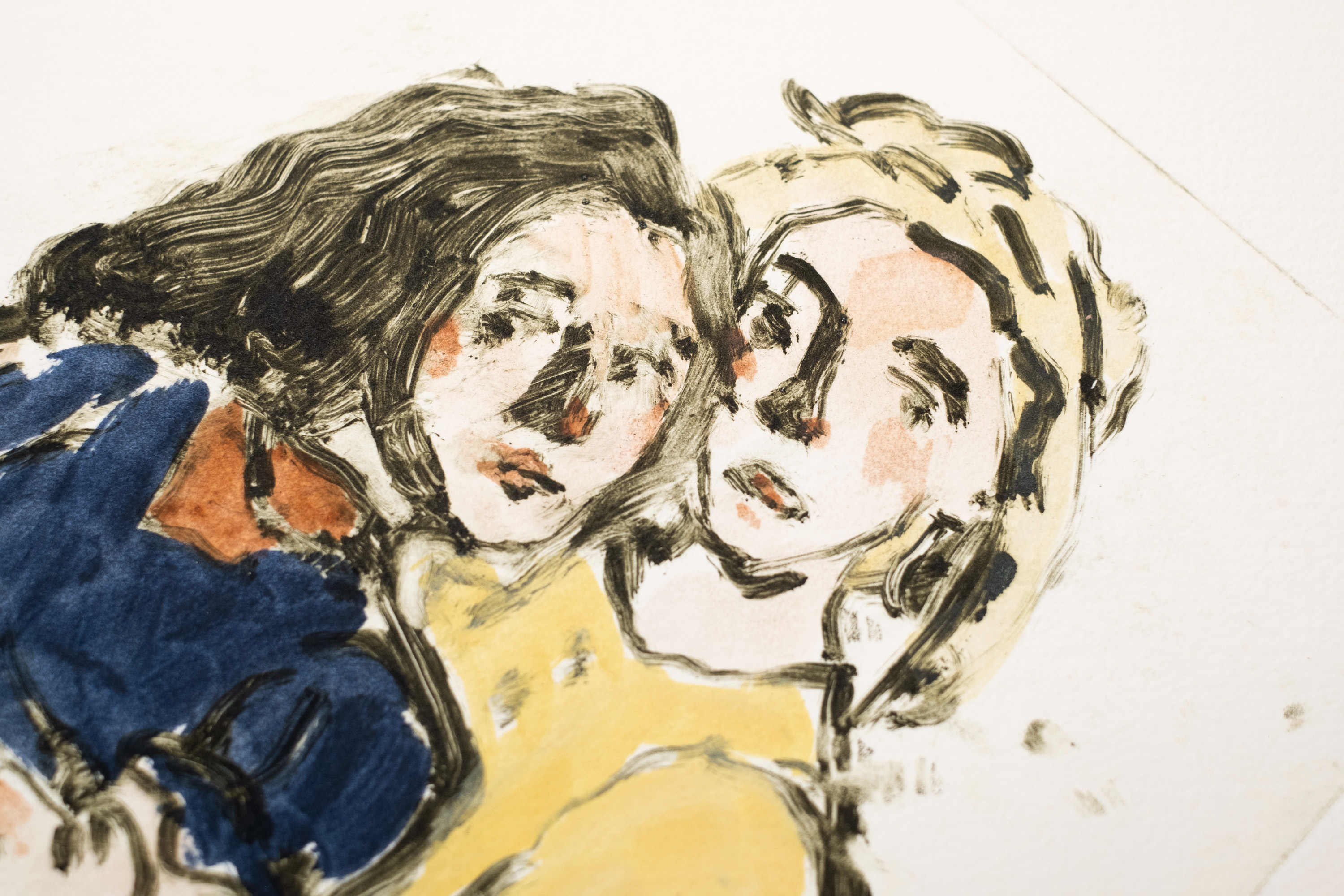
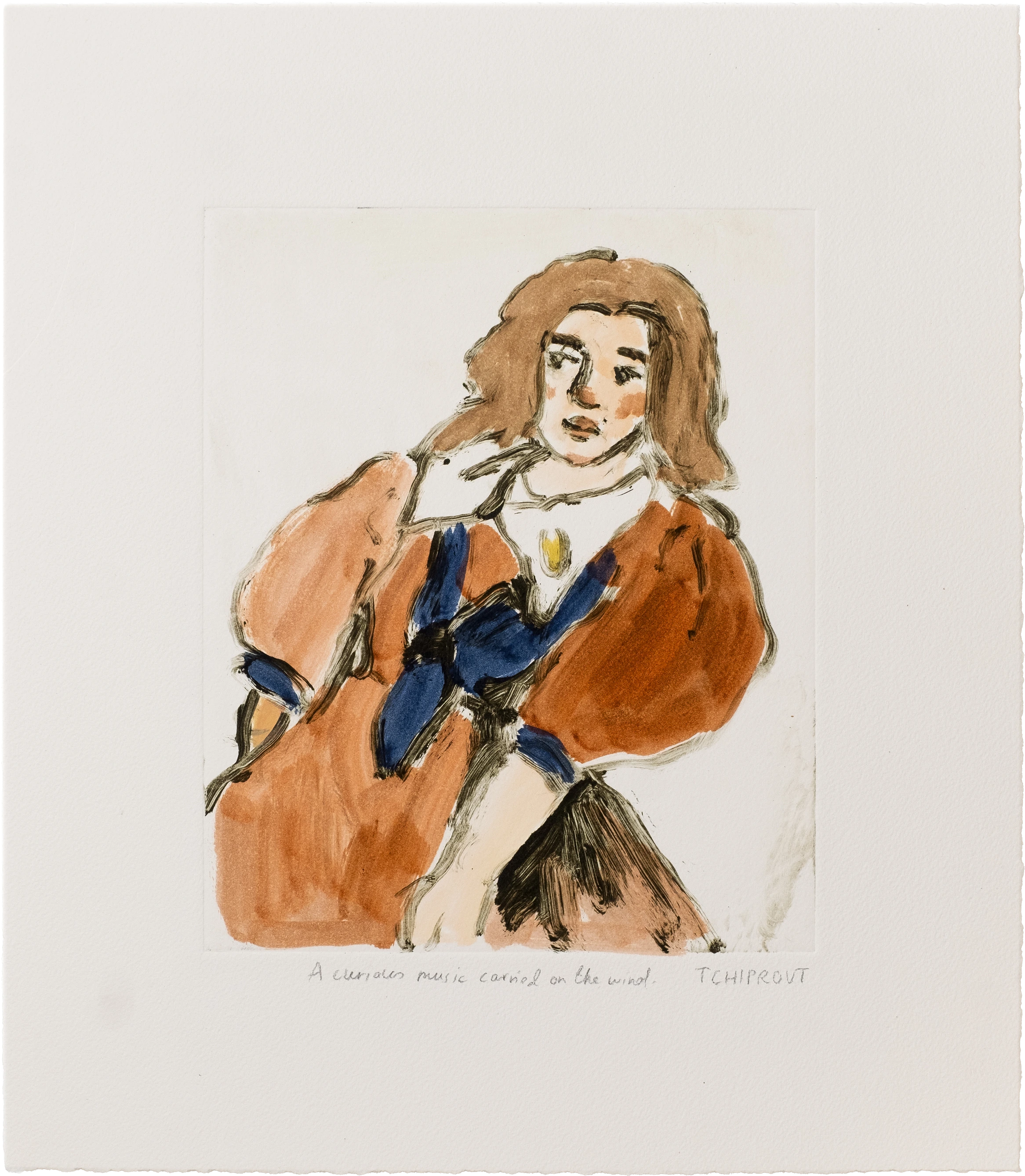
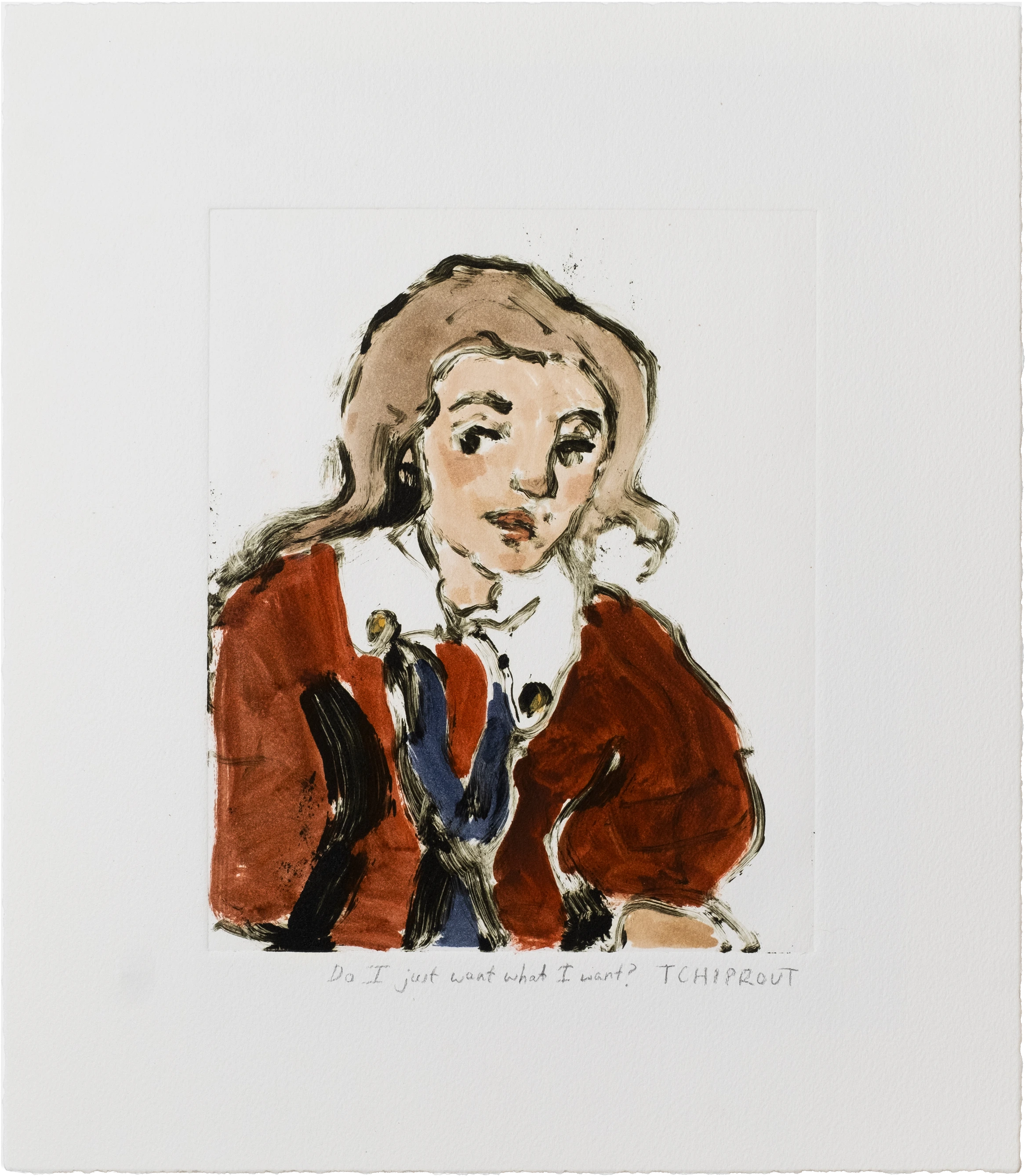
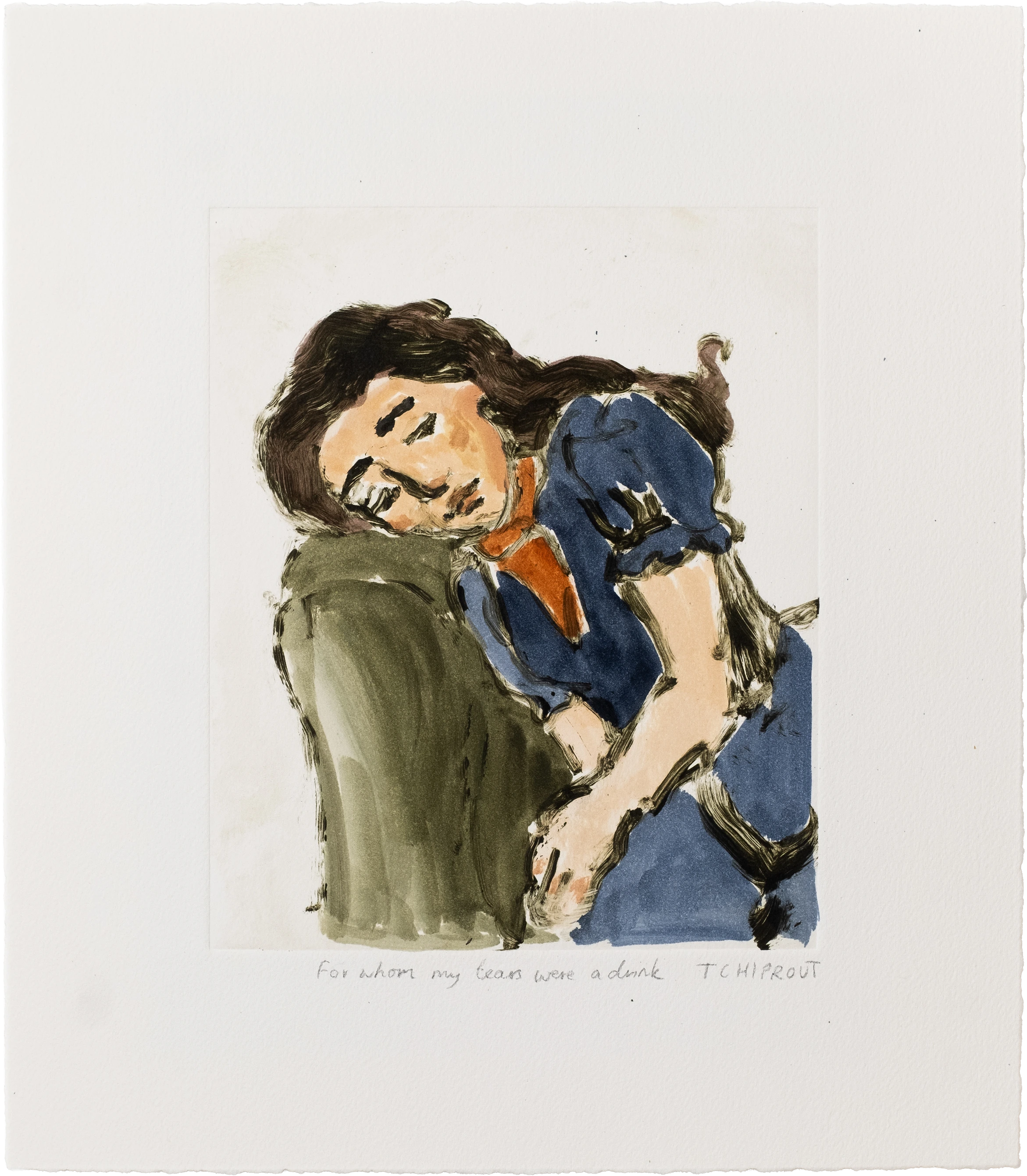
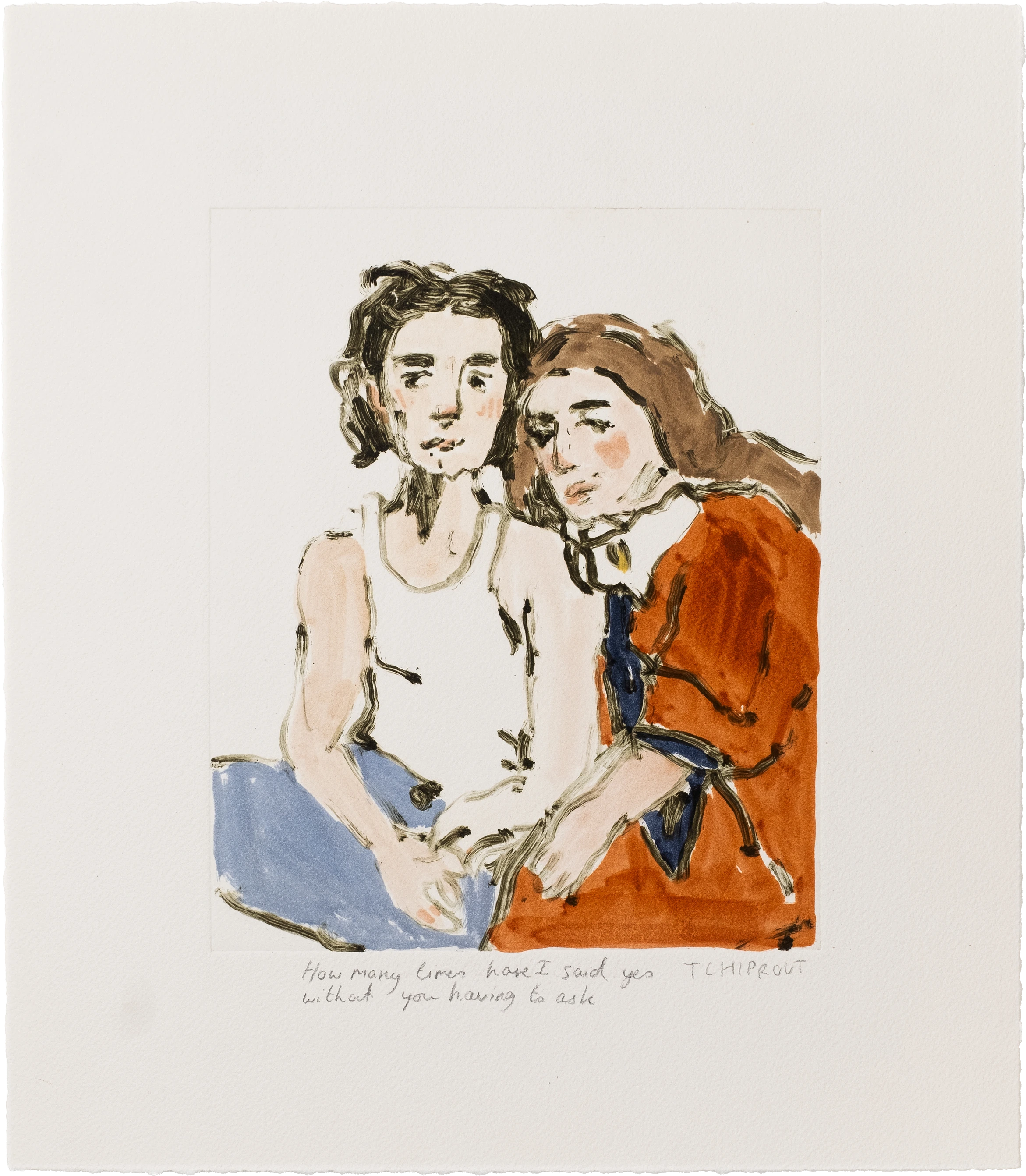
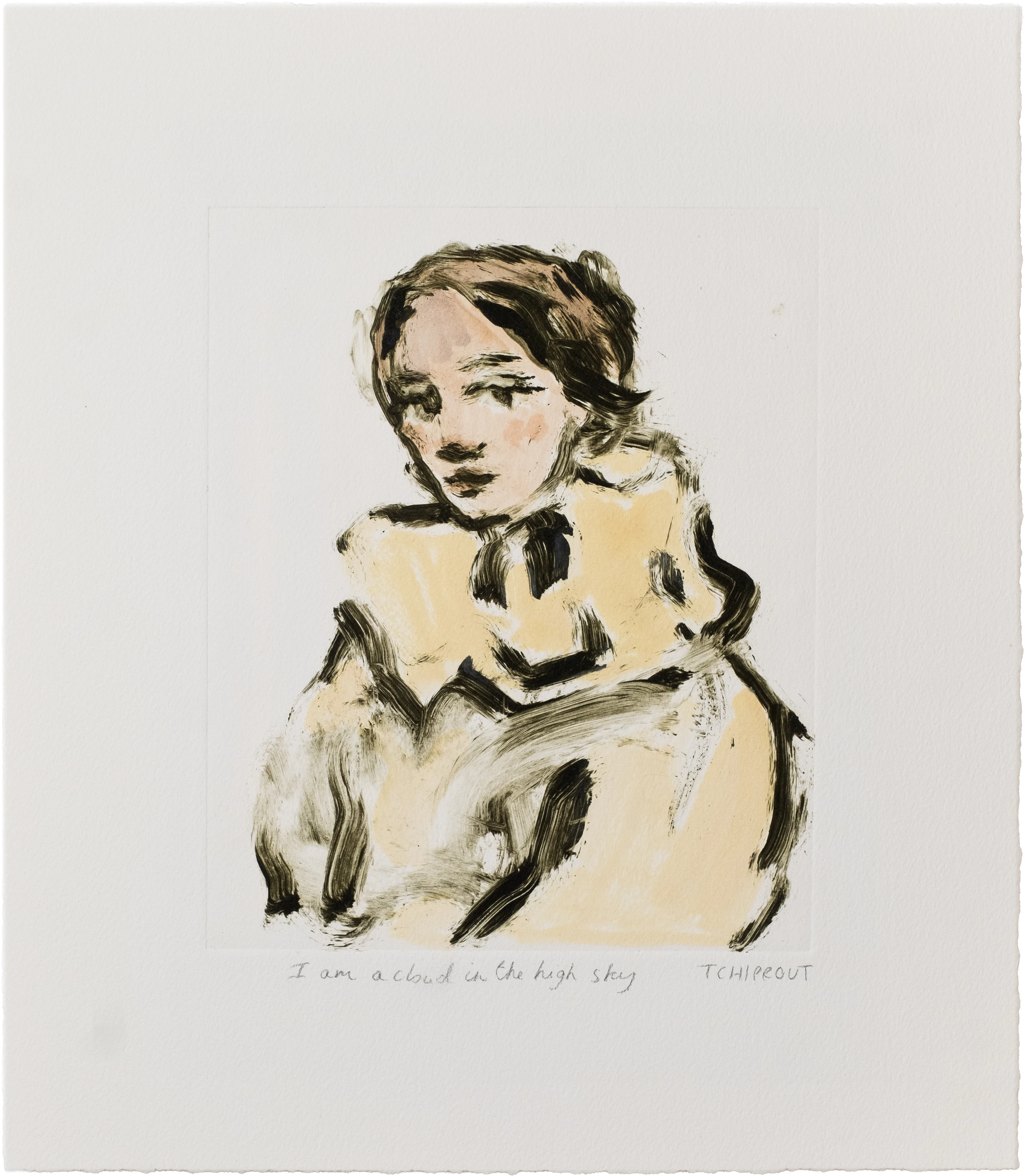
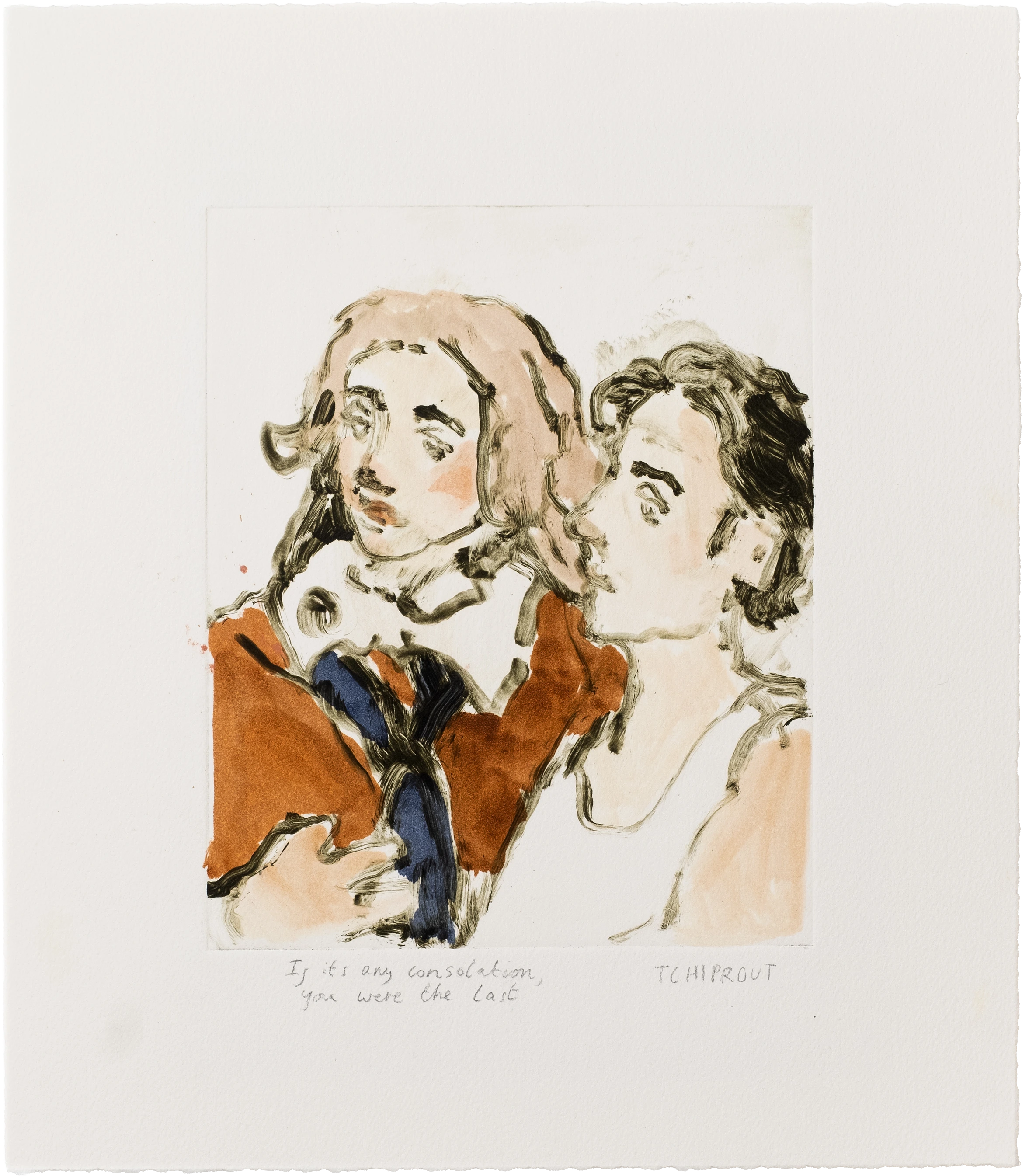
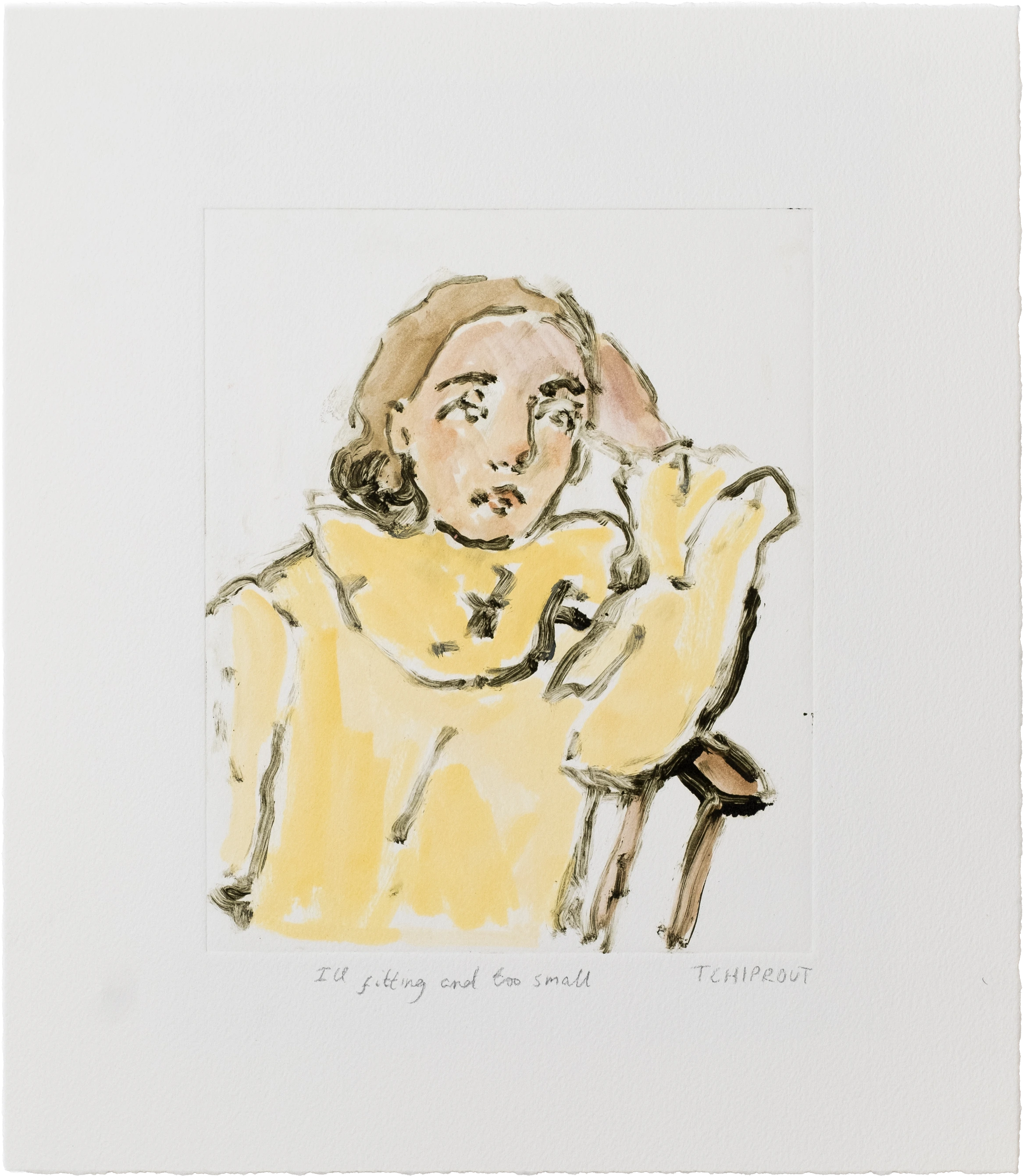
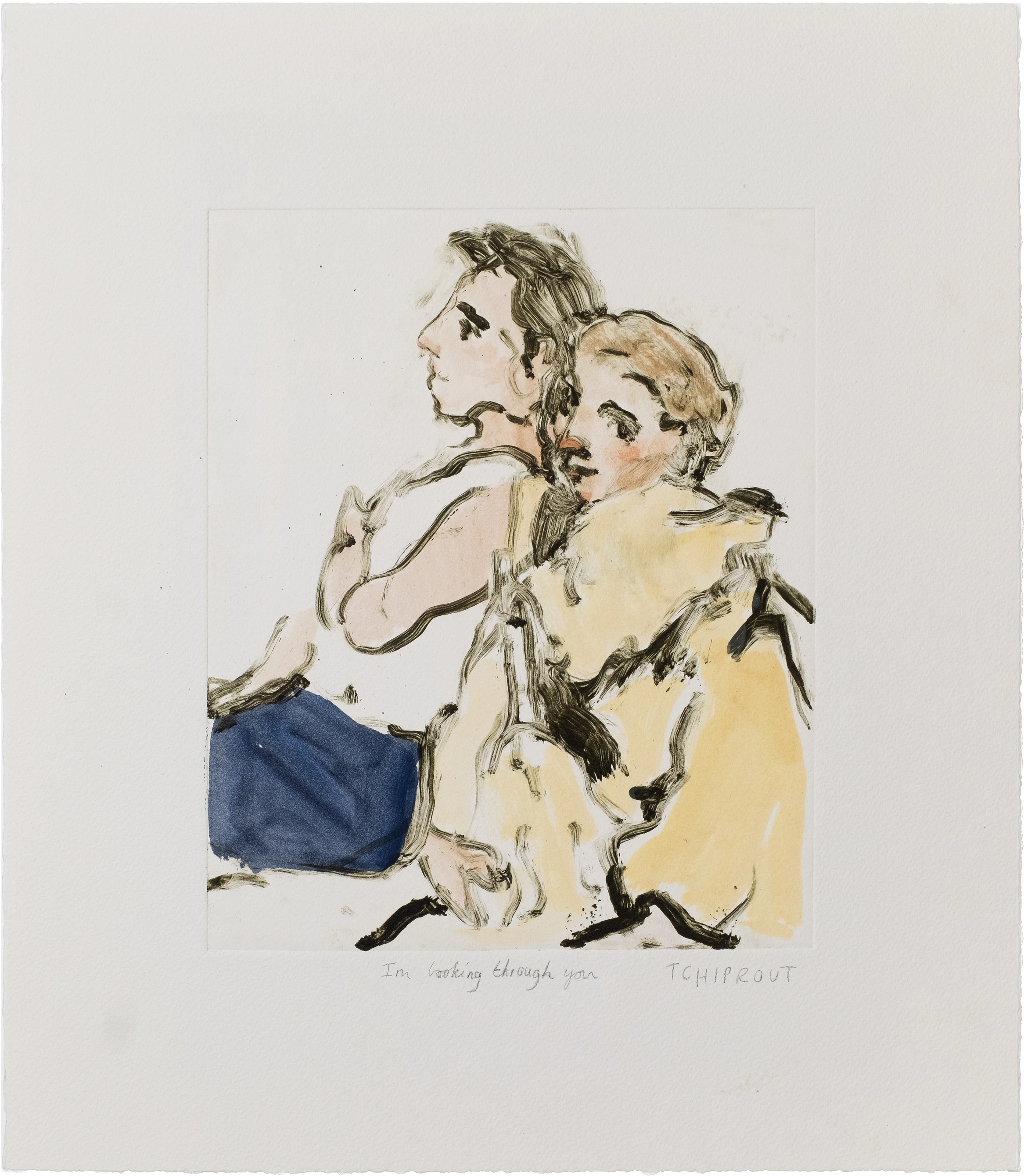
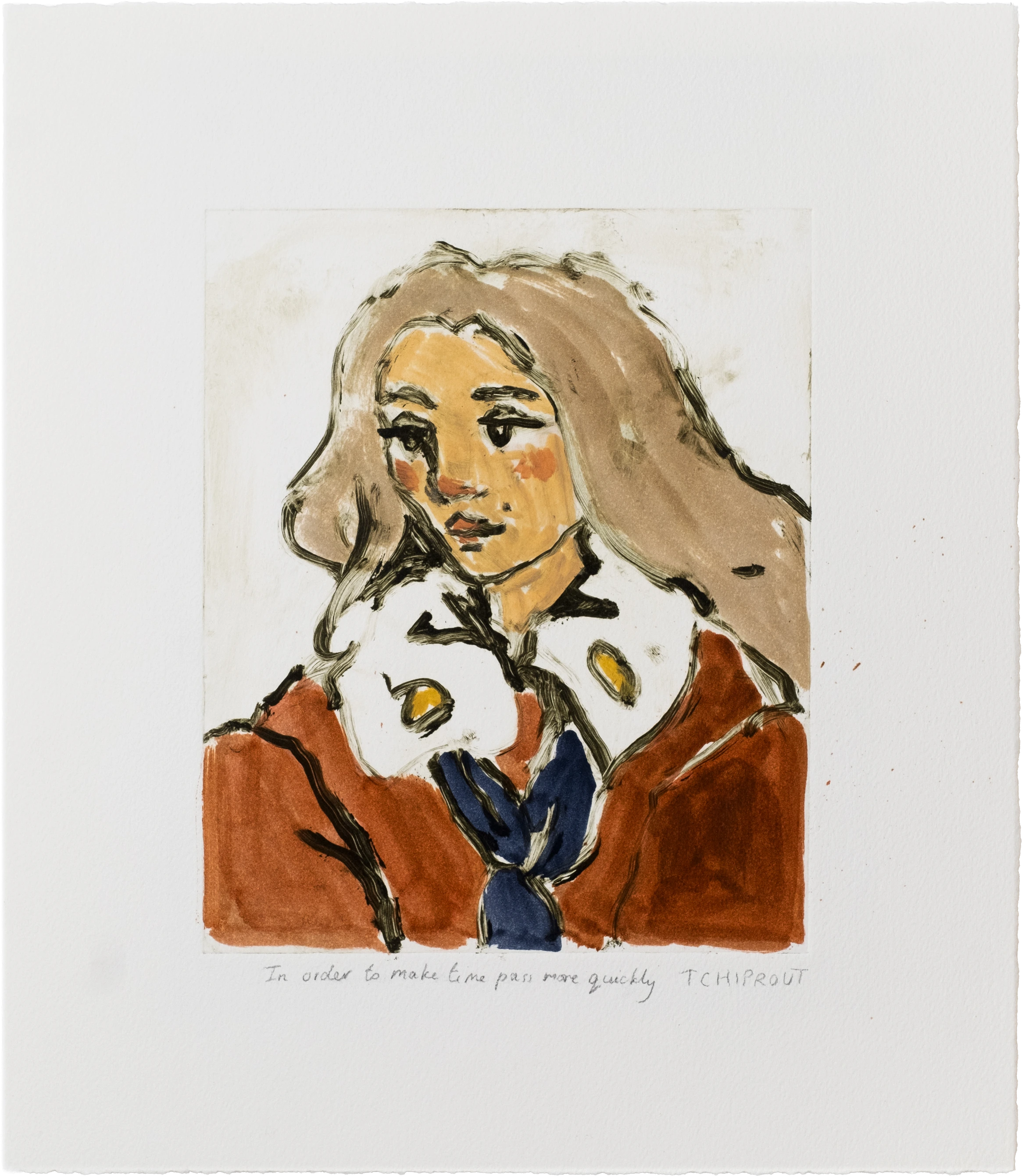
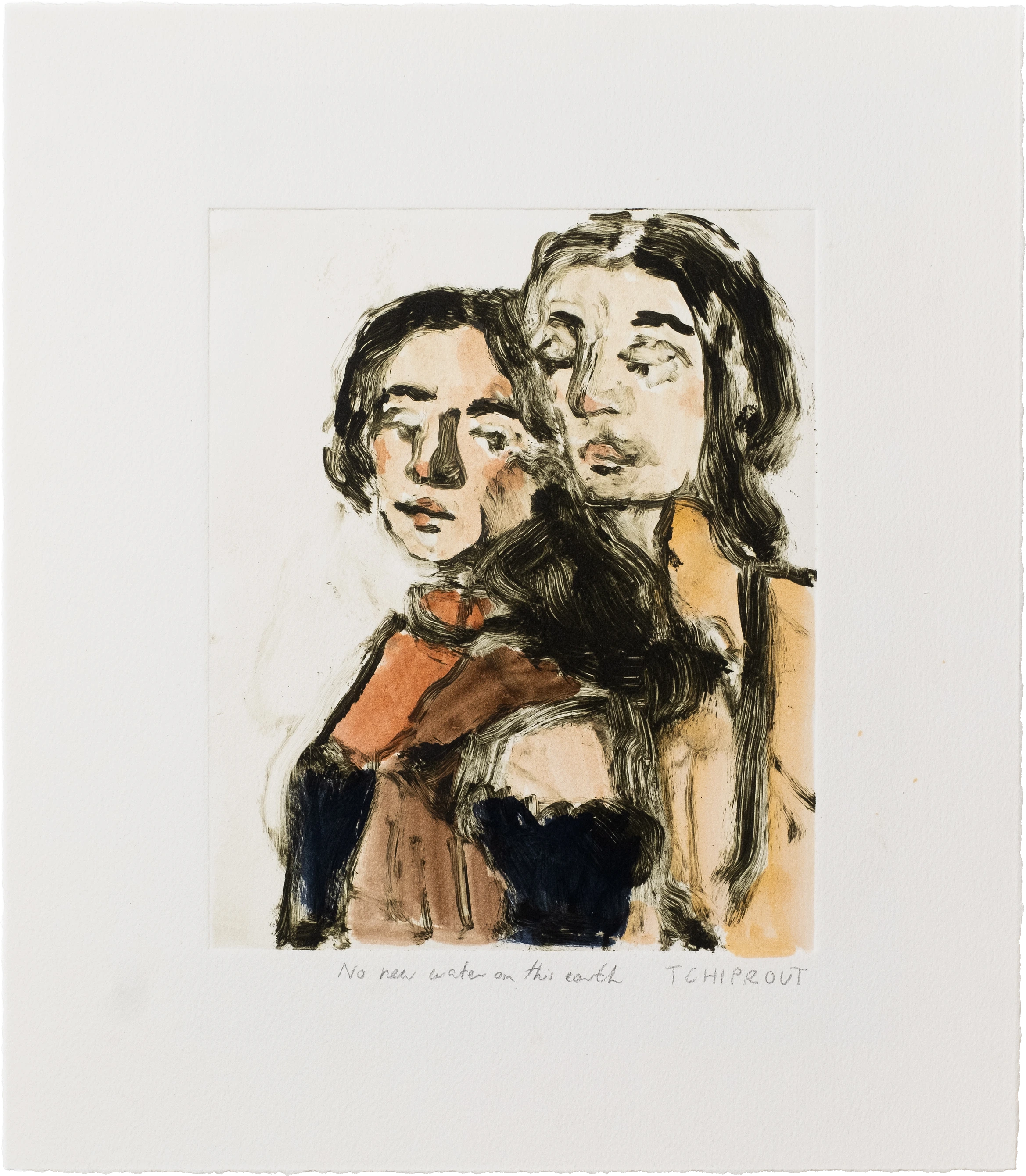
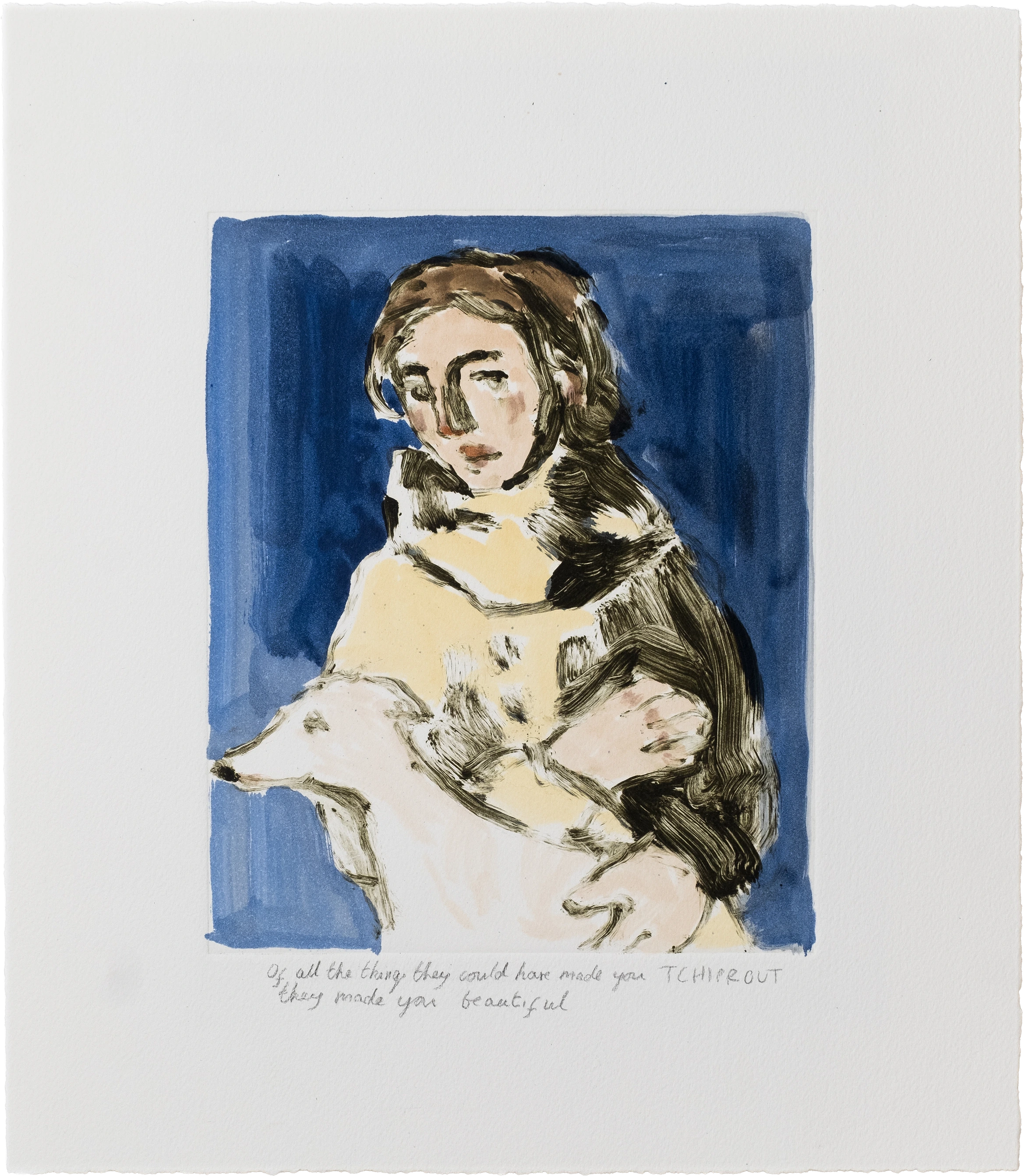
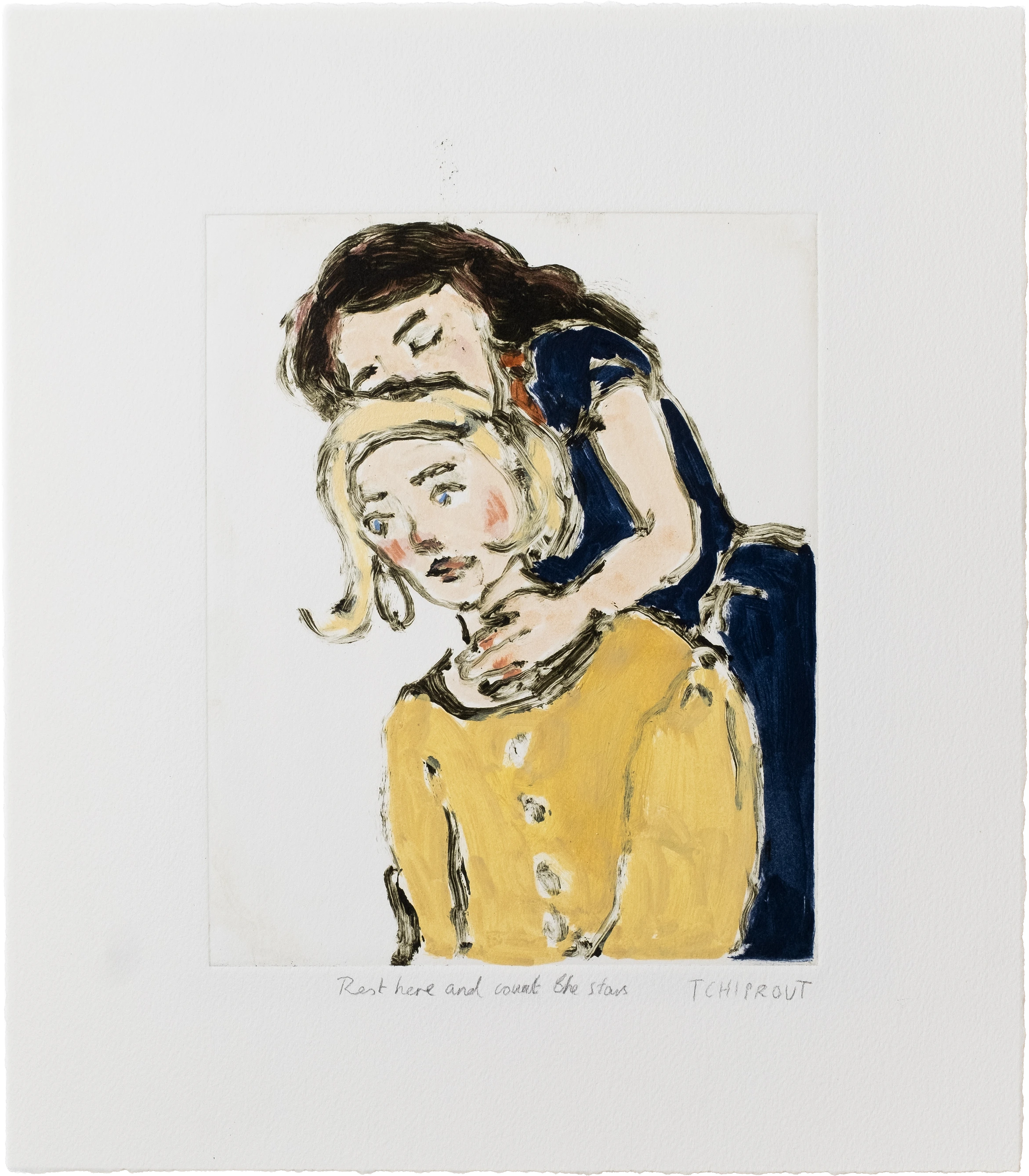
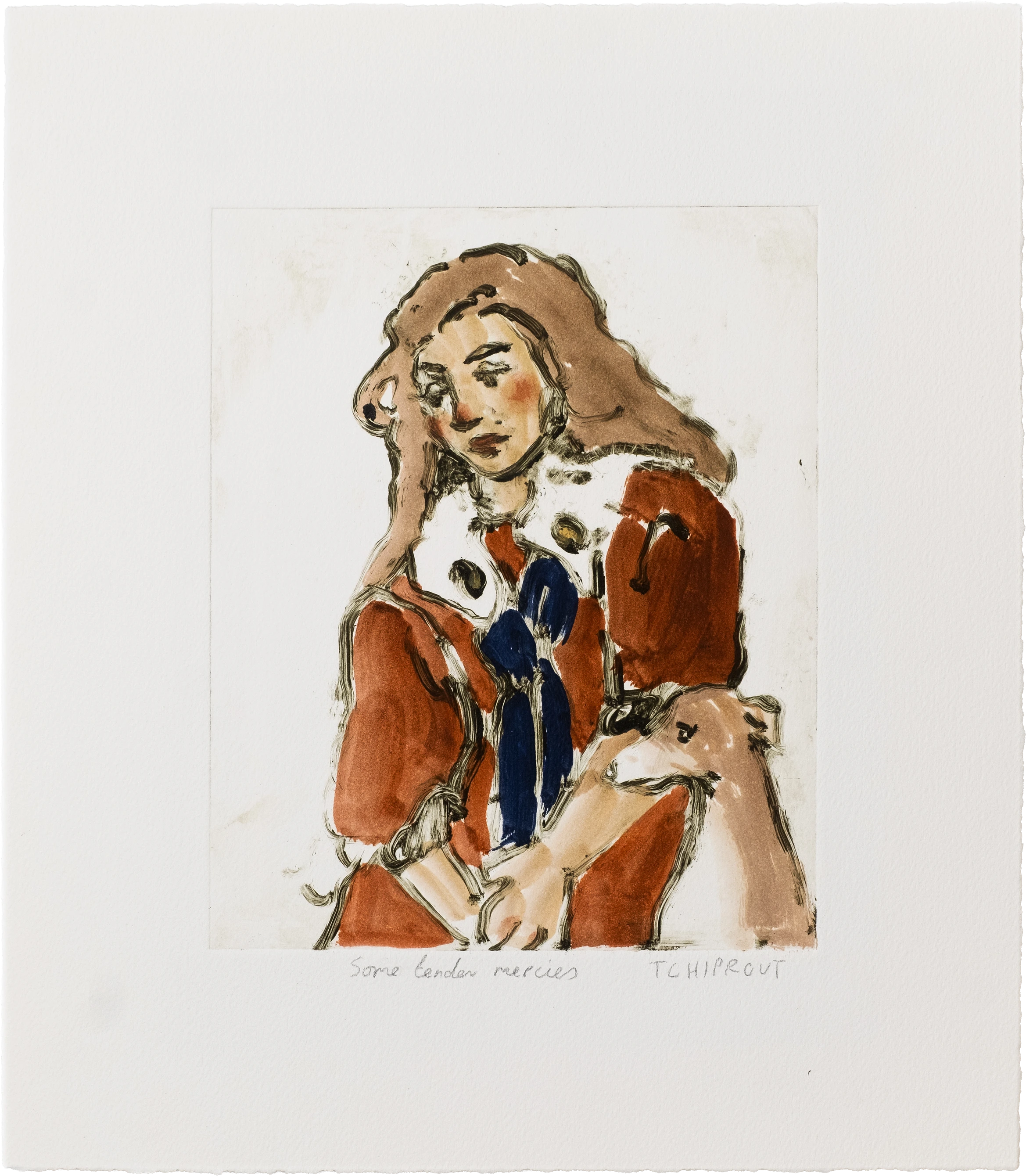
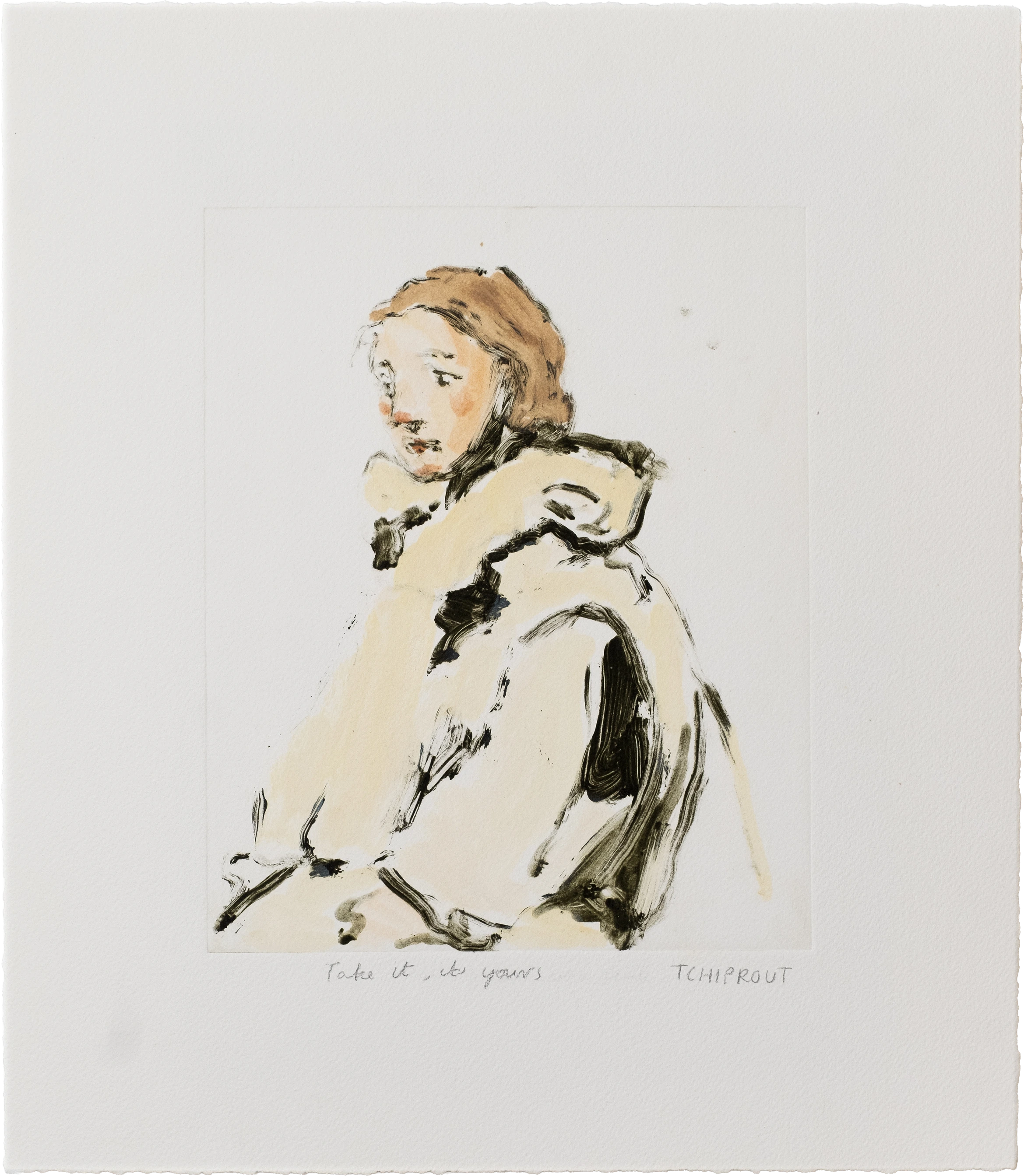
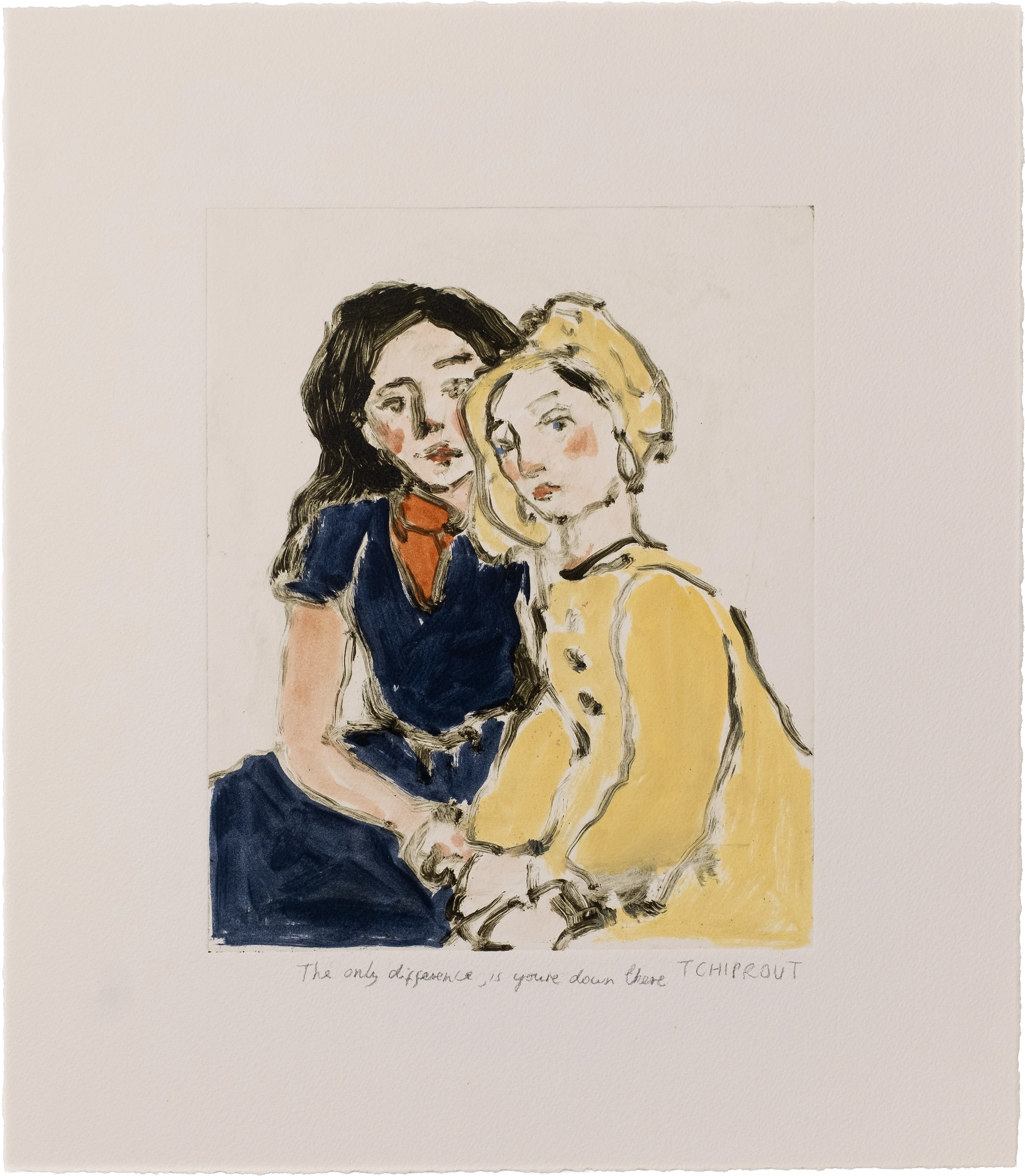
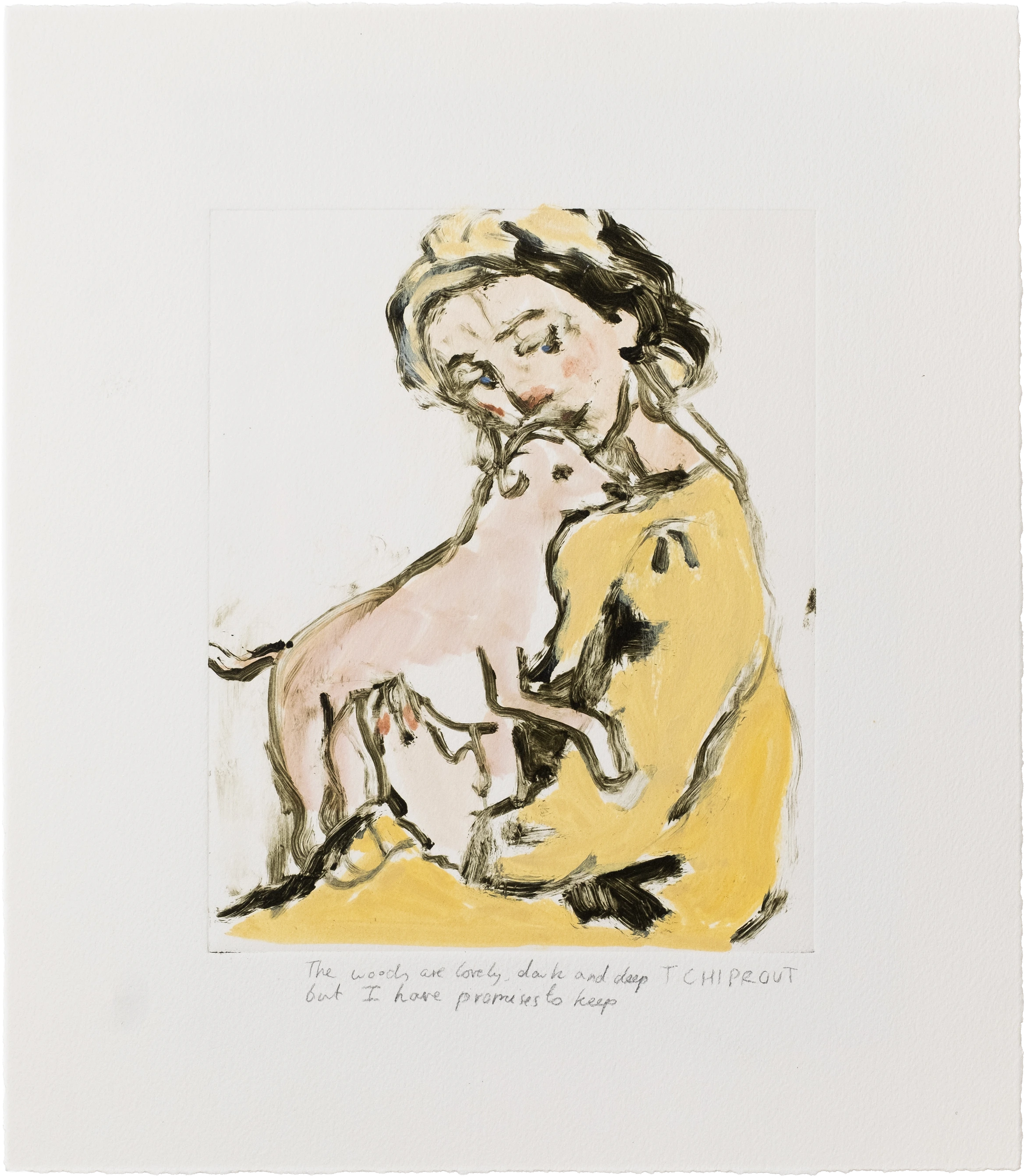
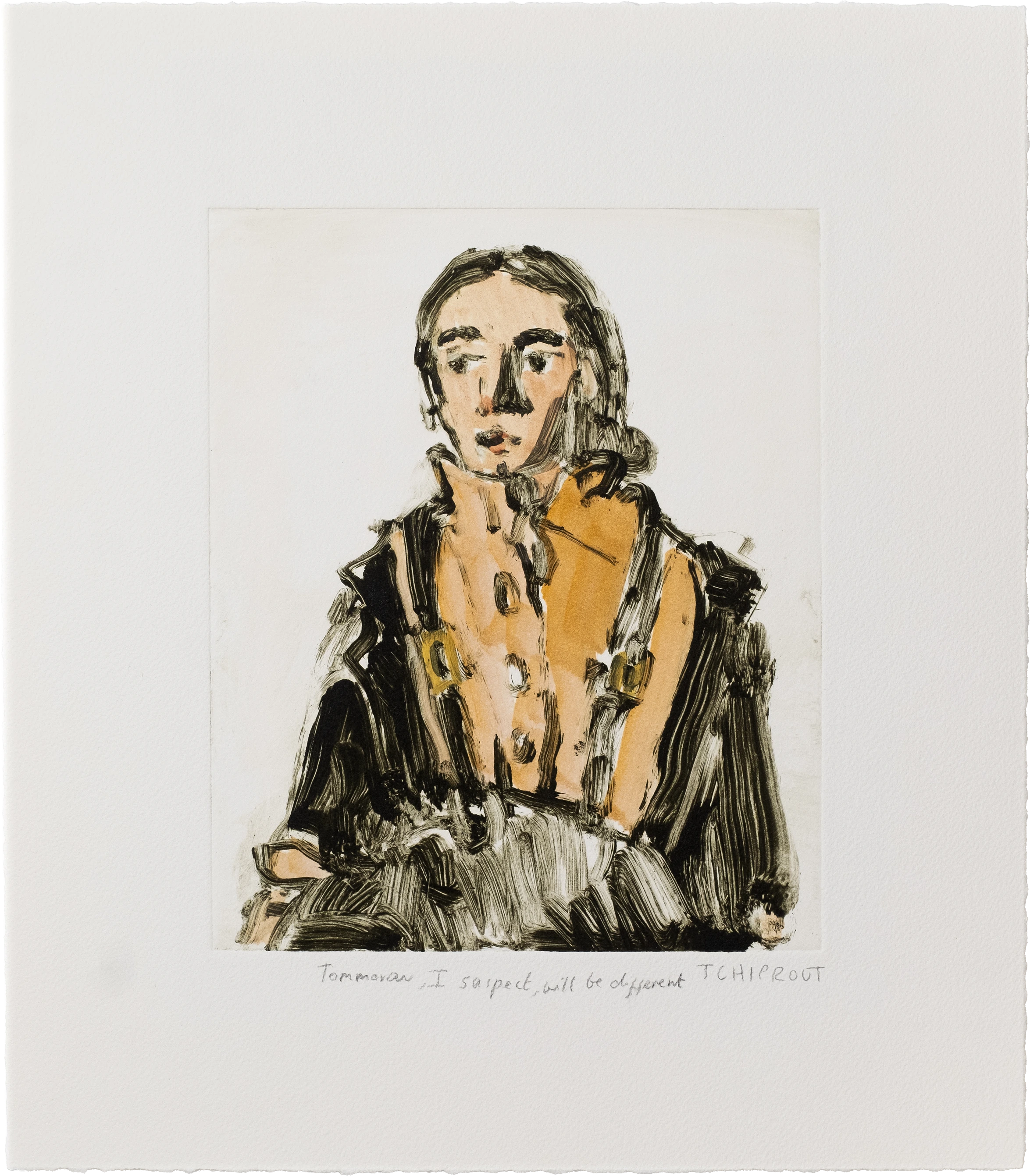
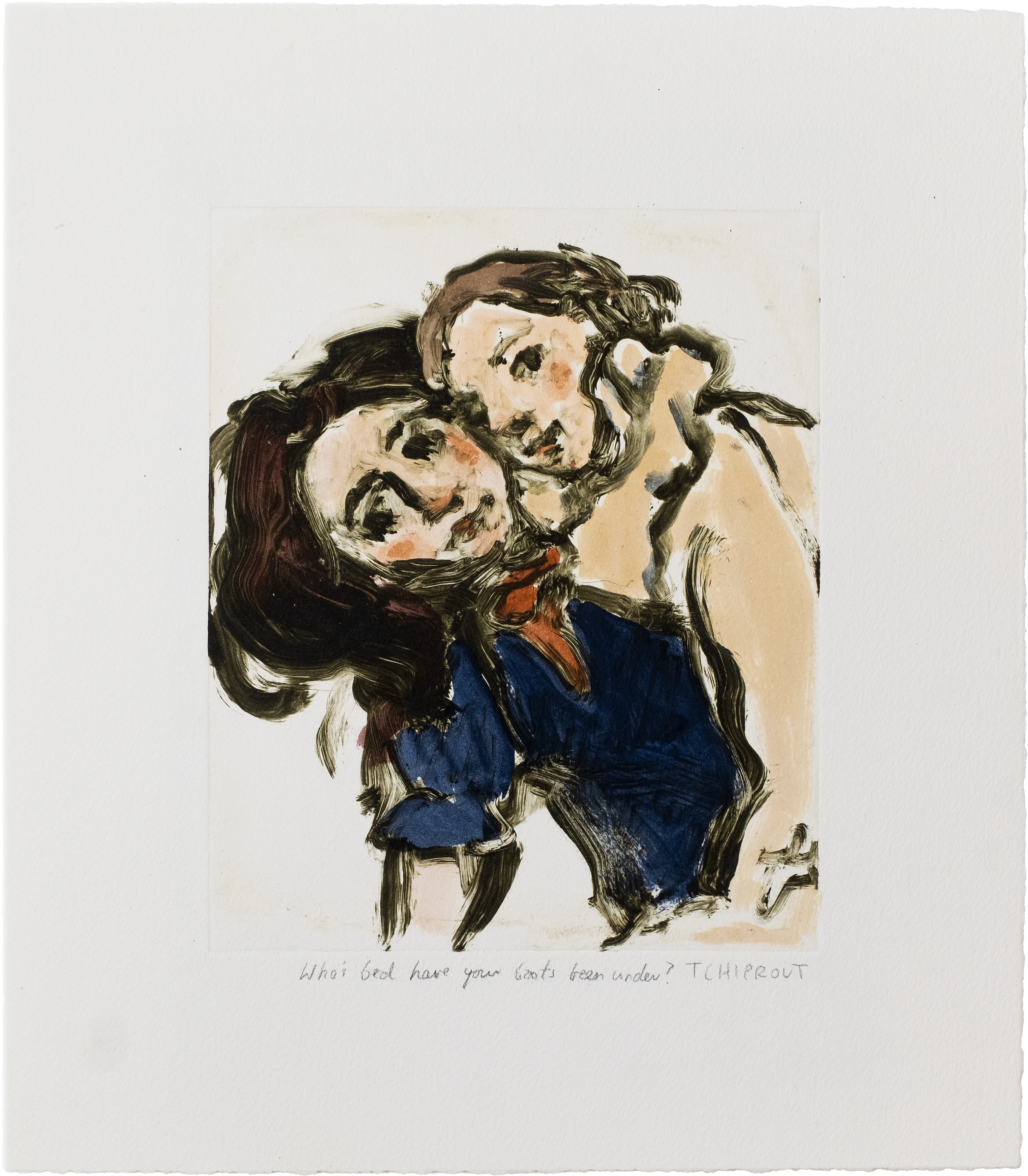
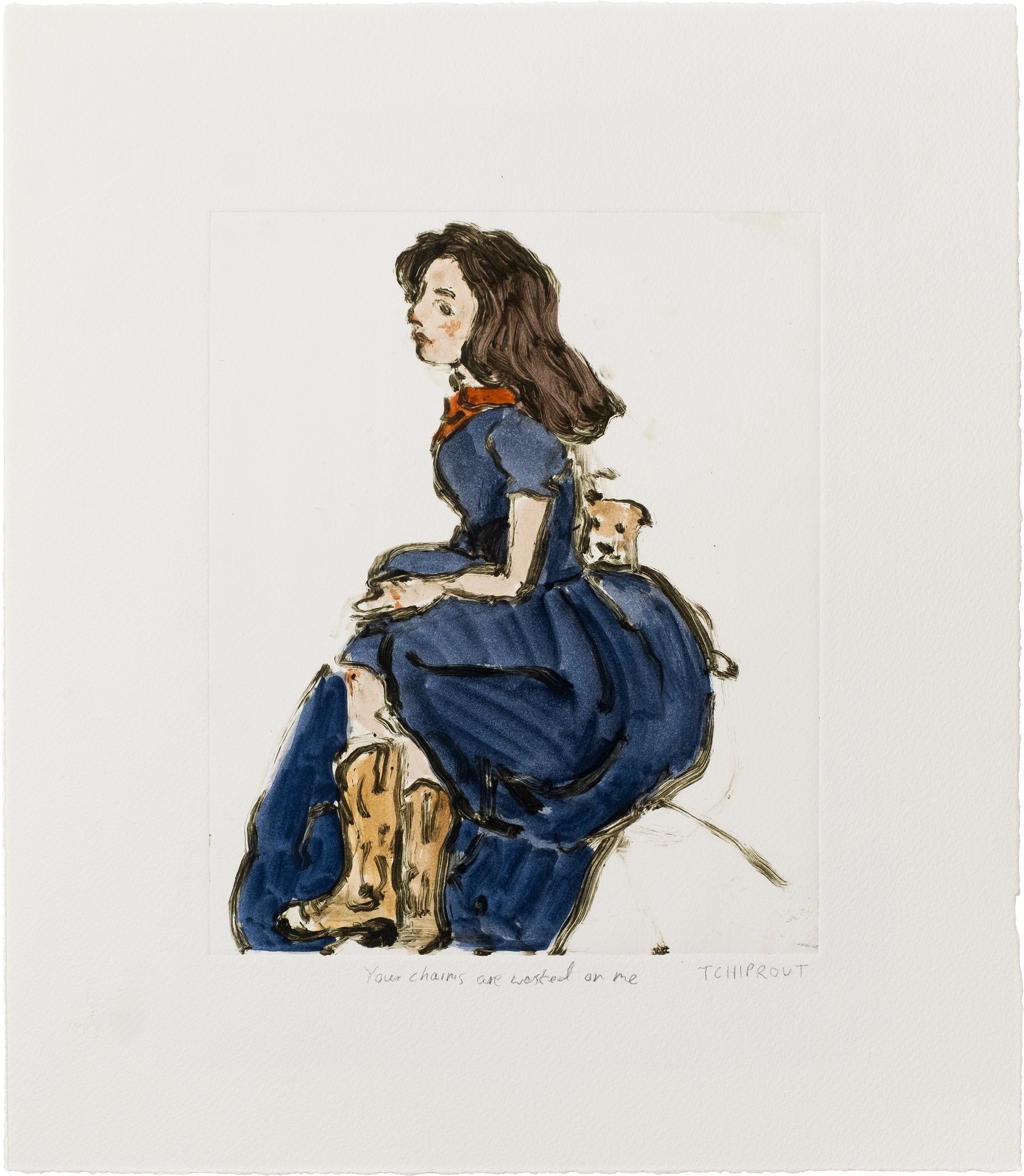
Etched on all things bright and dark marks Liorah Tchiprout’s return to her roots as a printmaker. This box set brings together twelve original etchings, accompanied by a series of monotypes. Across the works, small gestures, glances and encounters carry a quiet emotional charge, drawing on Tchiprout’s interest in poetry, theatre and imagined characters. Several of the etchings form the basis paintings, or are informed by them, while others remain independent works made specifically for the suite. Together, they reveal how images move through Tchiprout’s practice, from print to painting, and painting to print.
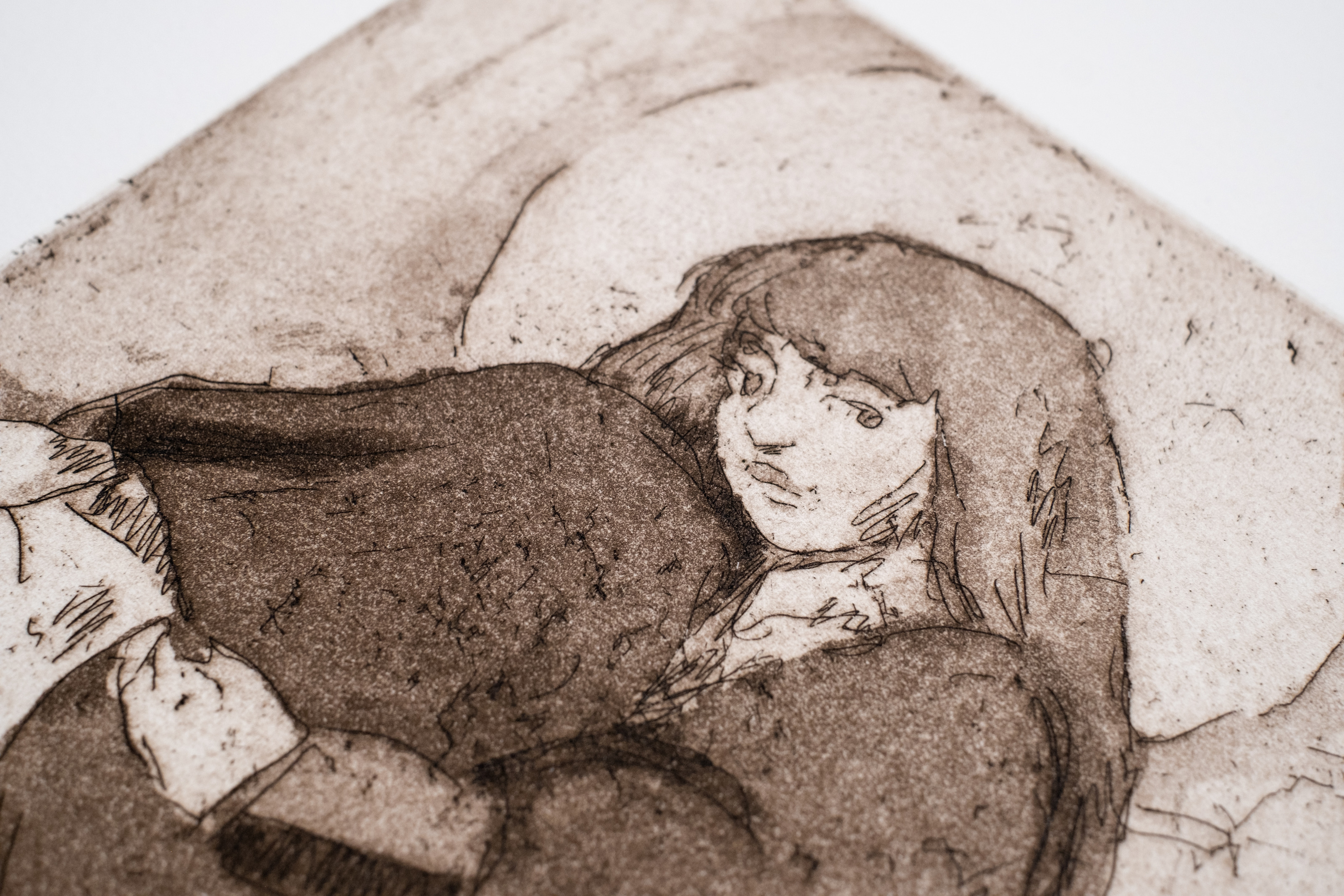
Tchiprout’s characters are drawn from a private cast of handmade dolls, built on mannequin and wire armatures and modelled on herself, close friends, and figures from literature, film and her own imagining. She stages them in intimate, theatrical scenes, where the embossed edges of the image invite the viewer into a world of connection, ambiguity and longing.
I am, at my core, a printer that makes paintings. The world of my work only exists in the synergy between painting and print, underpinned by drawing
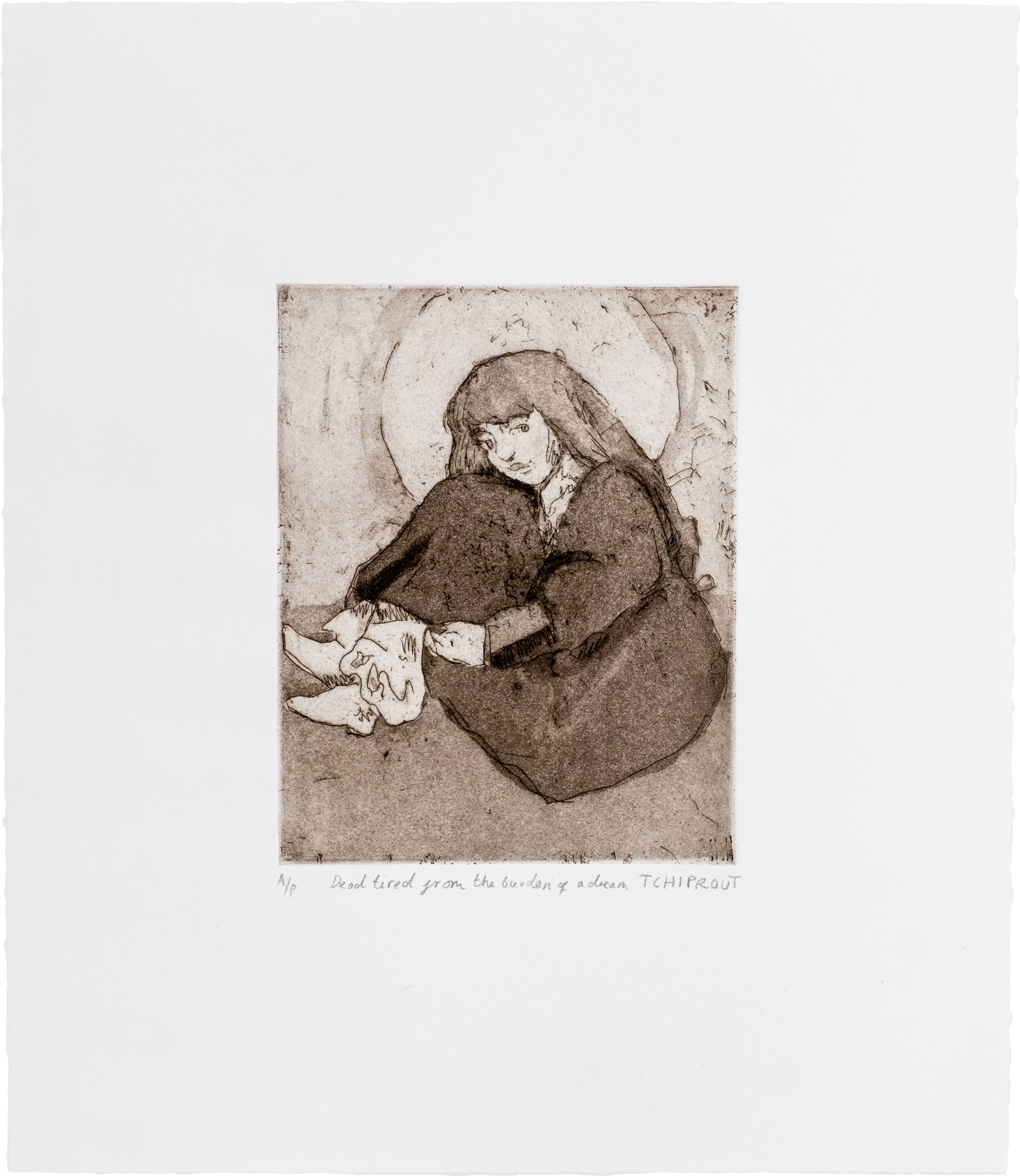
Dead tired from the burden of a dream shares its composition with a painting of the same name, and was produced as a study. Its title comes from a poem by Anna Margolin, characteristic of an ongoing engagement with the works of Yiddish women writers. Tchiprout often turns to writers including Miriam Karpilove, Esther Kreitman and Rachel Korn, both for source material for works, and also to gather evocative lines for many titles.
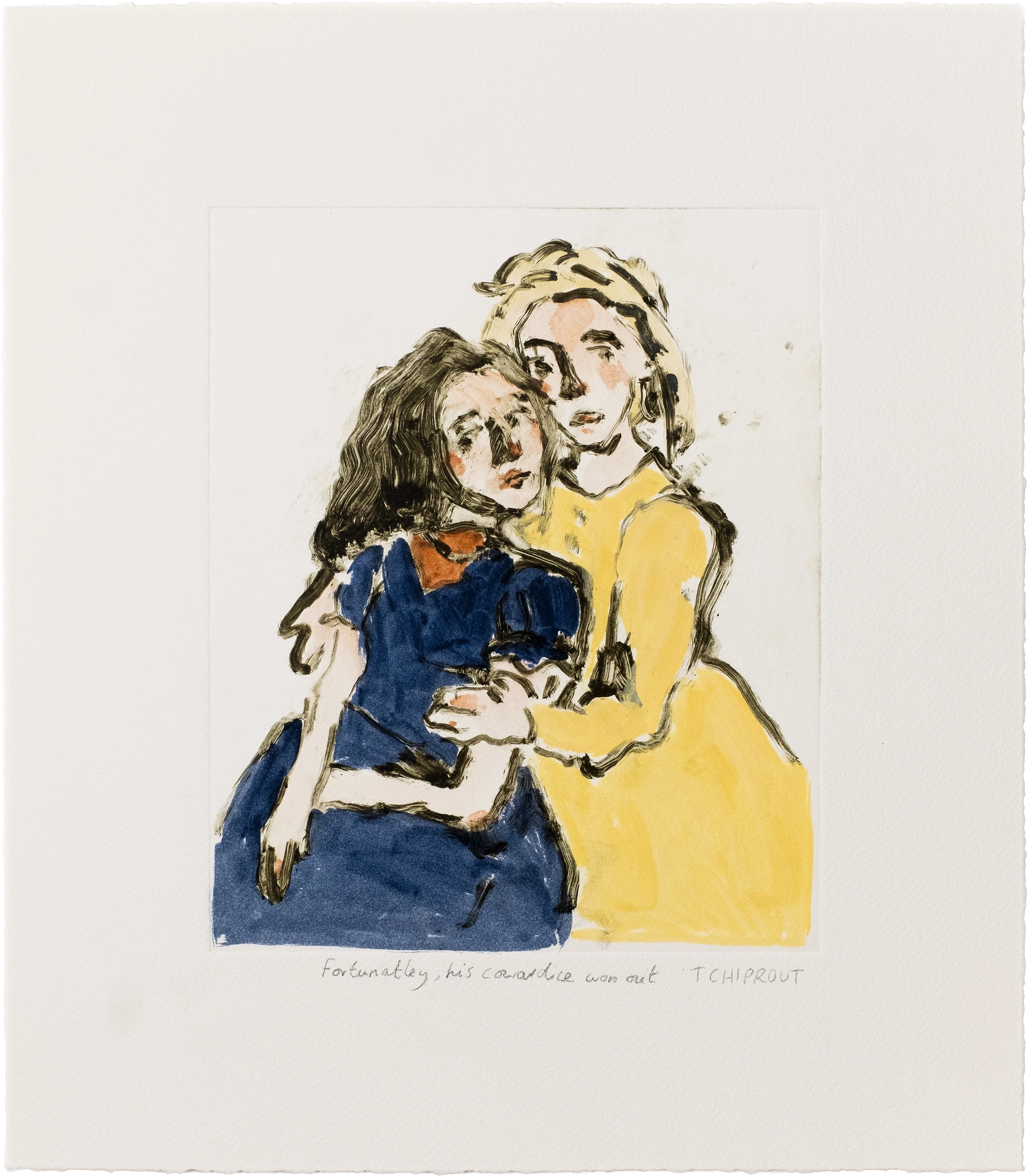
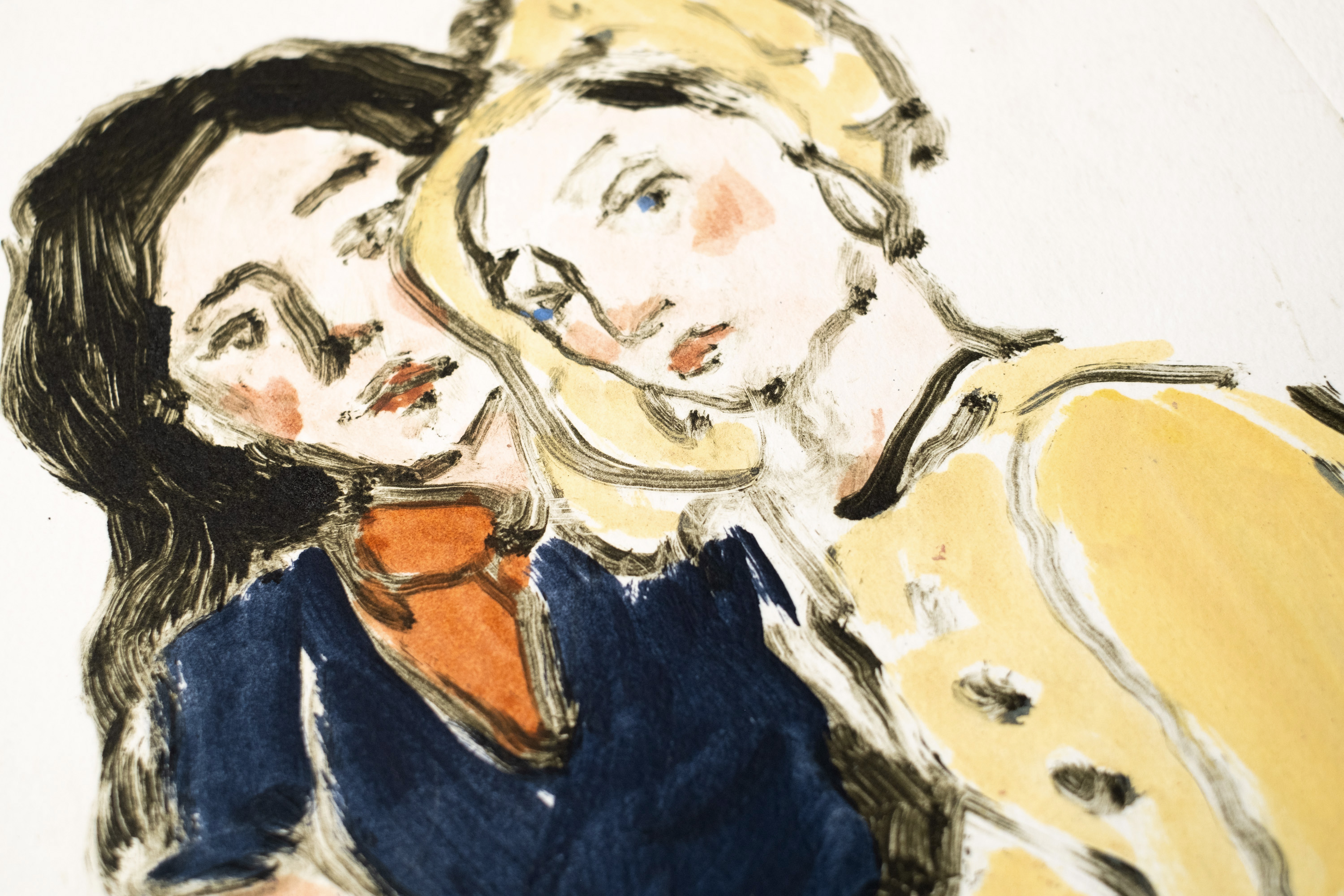
Where the etchings hold the accumulated weight of time and revision, the monotypes preserve the urgency of a single encounter. Their marks are freer and more immediate: a private language made visible before it can be reconsidered. Together, the two bodies of work reveal different but complementary aspects of Tchiprout’s practice—the patient construction of an image and the instinctive moment from which an image first emerges.
Seen inside the box, each monotype enters into a singular conversation with the twelve etchings. Seen independently, the ten remaining works offer something equally compelling: a secret window into the artist’s hand, thought and imagination at their most direct.
Loading...
Please disable your adblocker if video player doesn't load.
Liorah Tchiprout’s practice has naturally evolved into painting, although she remains, in her own words, ‘a printer that makes paintings’. In Etched on all things bright and dark, Tchiprout returns to her roots as a printmaker. Made in collaboration with Atelier JI founder Peter Bennett, this box set brings together twelve original etchings, accompanied by a series of monotypes. The artist’s first suite of etchings, Etched on all things bright and dark inscribes Tchiprout within the history of printmaking, joining her work to a lineage of great masters, from Dix and Goya to Rego and Kollwitz.
Etched on all things bright and dark completes a cyclical movement within Tchiprout’s practice, echoing in many ways the Kabbalistic idea of the ‘cycle of life’. Indeed, many etchings presented have informed the making of paintings. For instance, Dead tired from the burden of a dream shares its composition with a painting of the same name. The title is a line taken from a poem by Anna Margolin. Tchiprout often turns to Yiddish writers such as Miriam Karpilove, Anna Margolin and Rachel Korn in her work: their words have inspired many titles given to her etchings and paintings. In a similar vein, Etched on all things bright and dark develops the relationship between image and text by inscribing titles, etchings and paintings as part of a self-referential visual language found across Tchiprout’s practice.
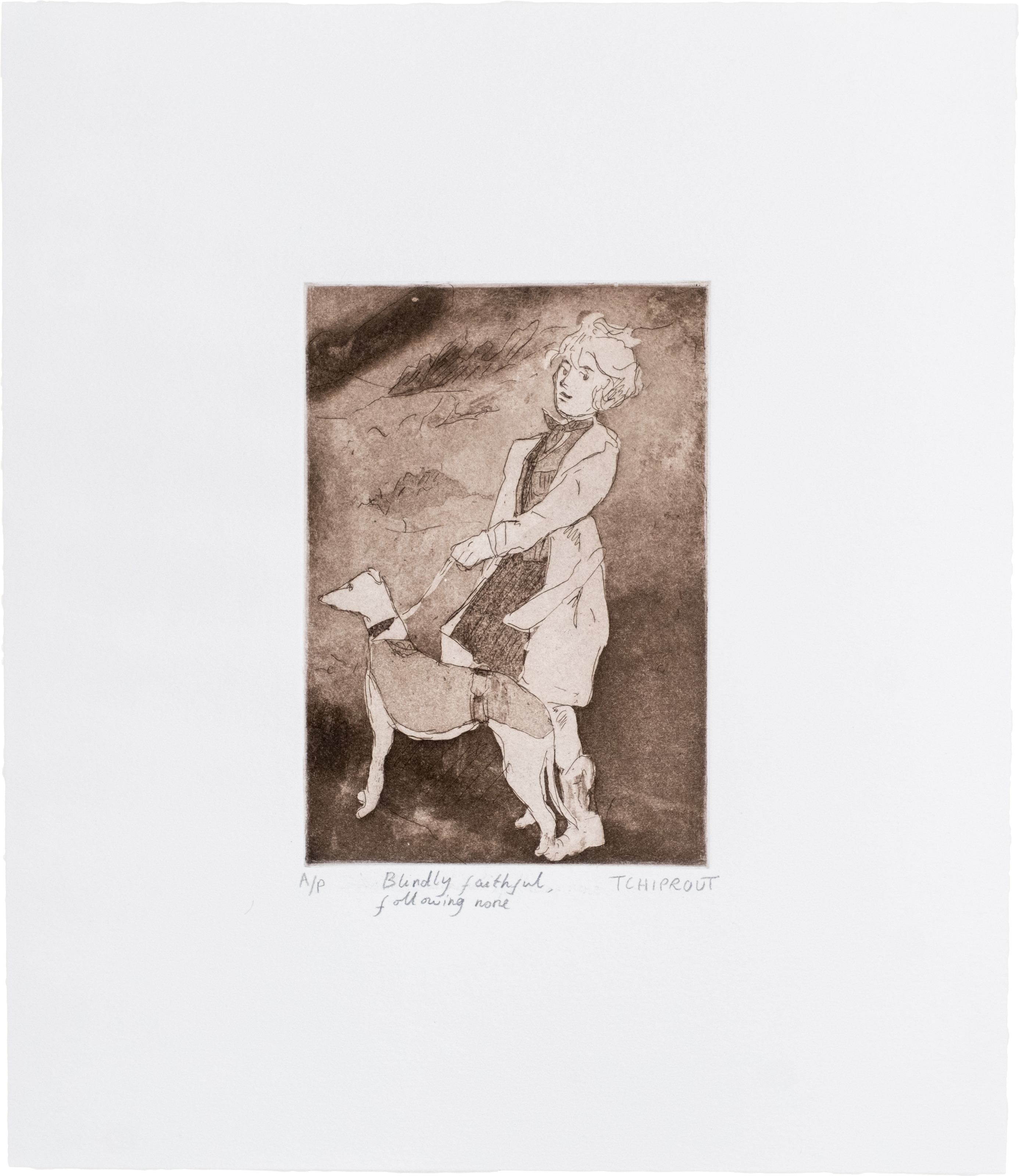
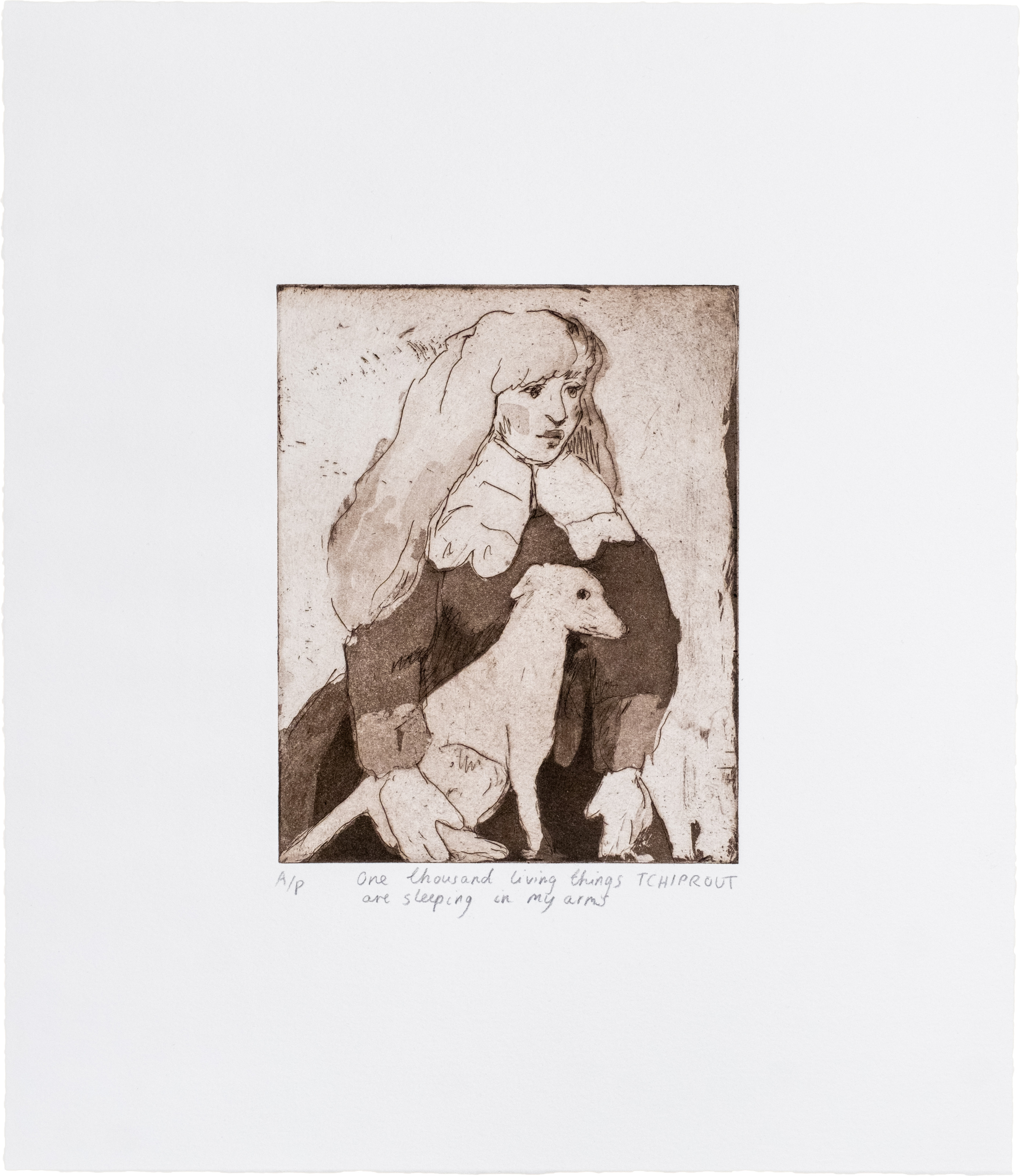
Some etchings presented in this box set are independent of Tchiprout’s painting practice, while others allude to the art historical tradition of portraiture, explored further in Tchiprout’s solo exhibition at Pippy Houldsworth Gallery, The Family Katz (2026). In Blindy faithful, following none, for instance, Charles Wellington Furse’s Diana of the Uplands (1903-04) is reinterpreted as a self-portrait. Tchiprout incarnates the spirit of Fuse’s Diana whilst remaining completely herself; her attire is the same what she wears to walk her beloved dog Fango in the park. In fact, dogs often appear in Tchiprout’s work as companions and characters. This is the case in the etching One thousand living things are sleeping in my arms. A little greyhound is tucked preciously on the lap of the protagonist; each provides a safe haven for the other.
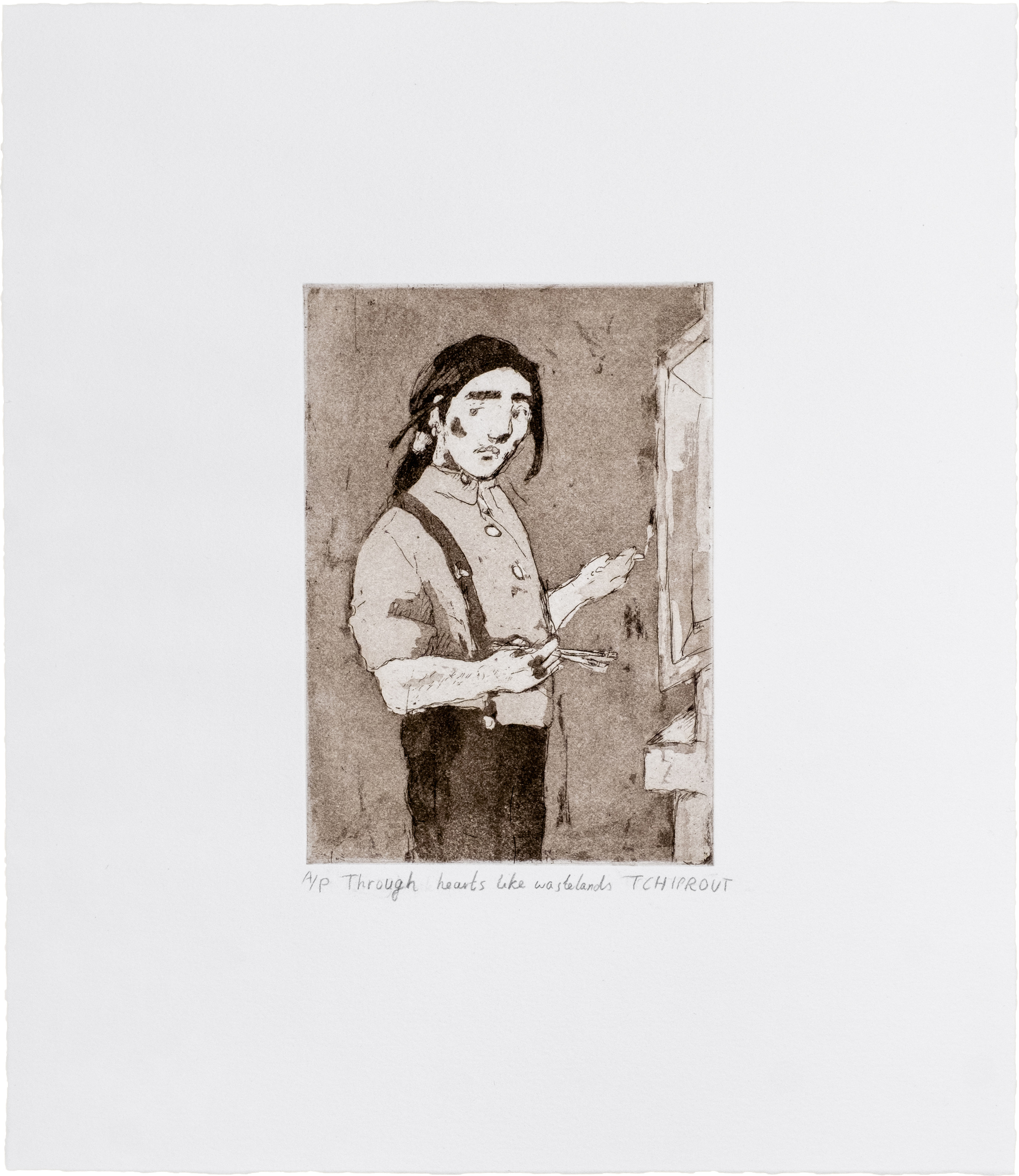
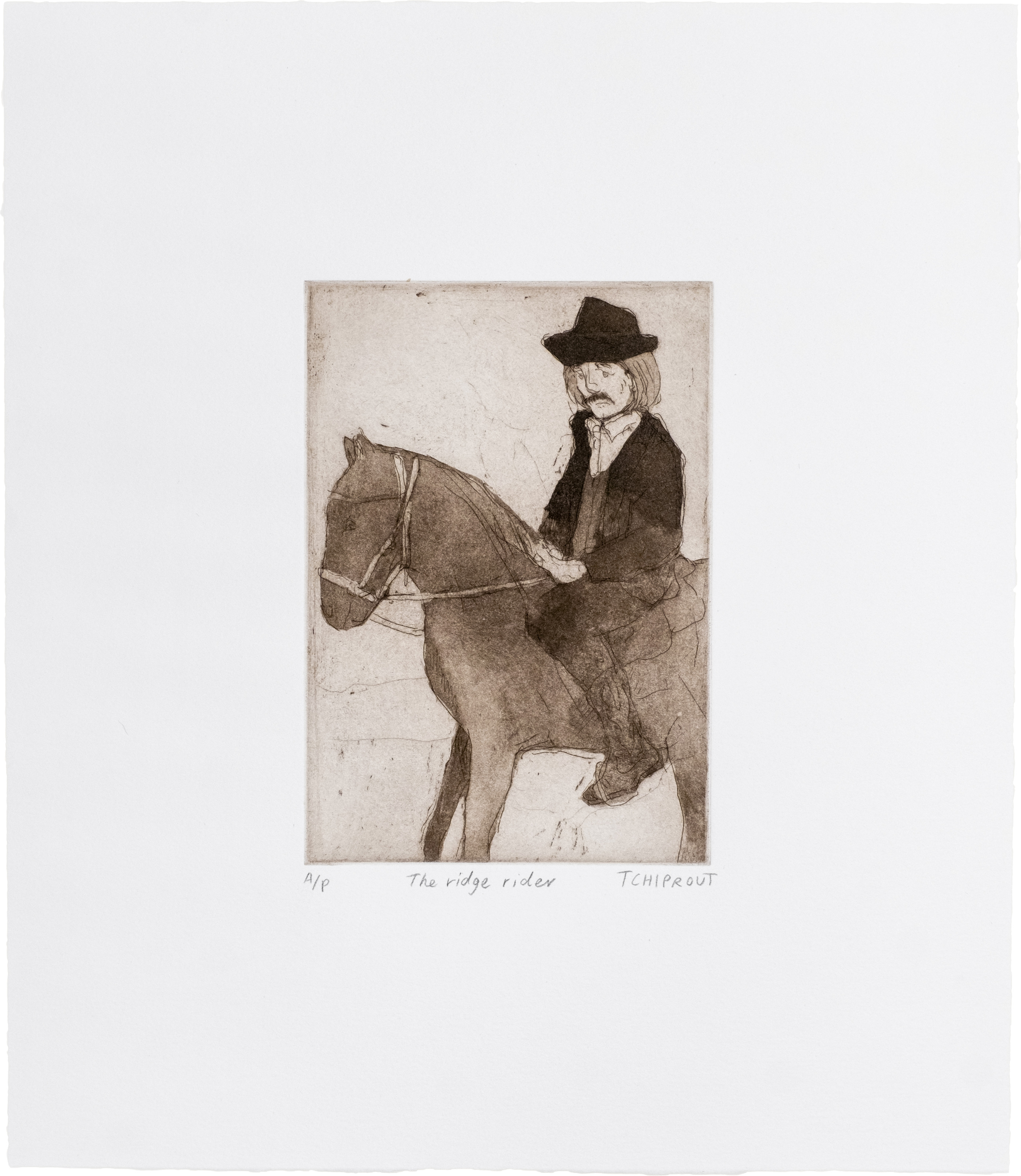
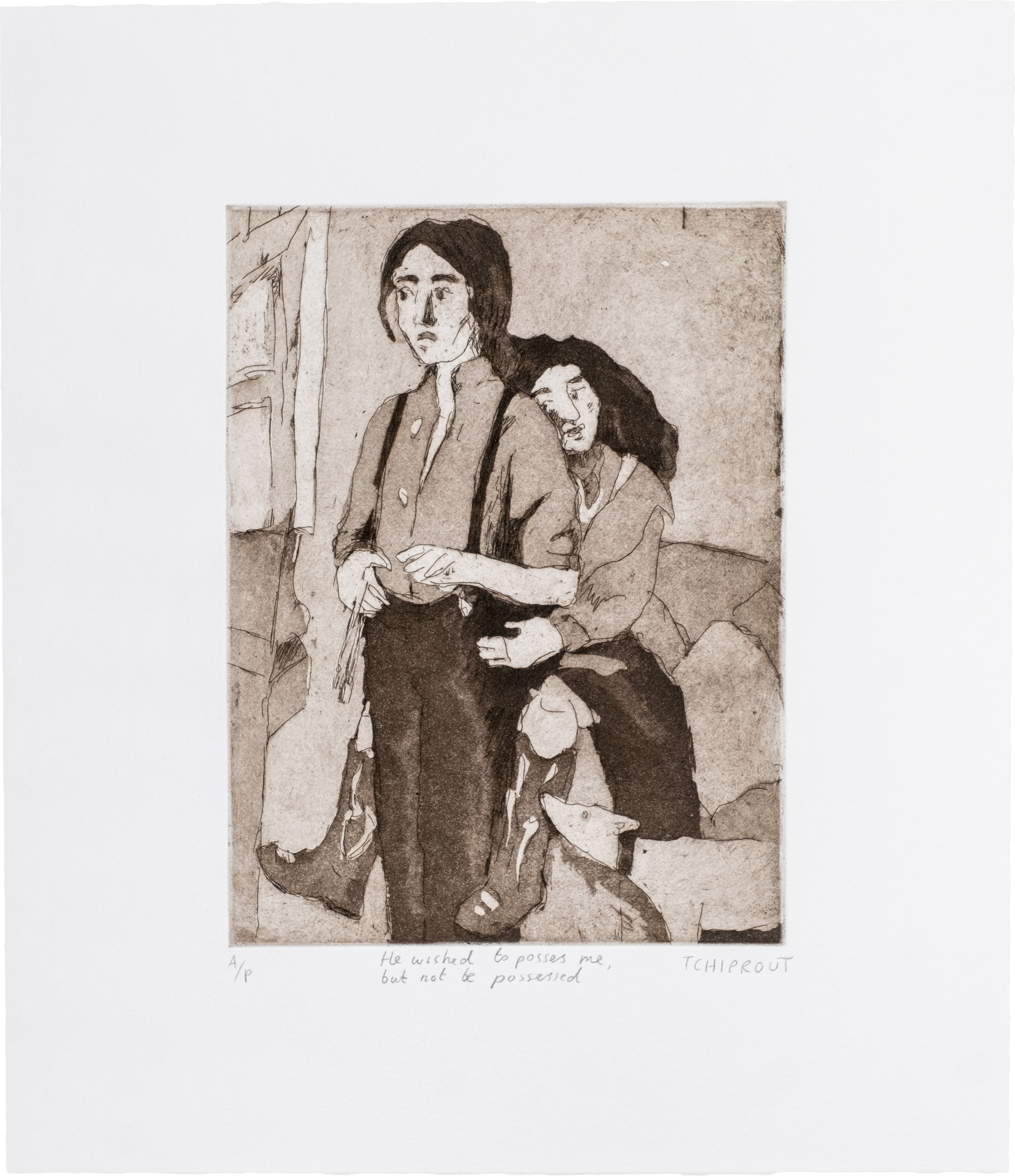
'I am interested in the way that you can say so much with the inclination of a head or the angle of a thumb', says the artist. Tchiprout’s characters are inspired by family and friends, characters from film, and handmade dolls created by the artist in her studio. Each etching is a ‘scene’ unfolding as though on a theatre’s stage – reminiscent, in some ways, of Charlotte Salomon’s Leben? oder Theater? (1940-42). In fact, many objects depicted belong to the register of both the domestic and the theatre. Halos of light are created using a lamp, subtly alluding to the sometimes scarce resources of theatre production. This way, Tchiprout plays with the Kabbalistic idea of the ‘kingdom of lies’, or the belief that what we perceive is a realm of illusion hiding a deeper truth. Further references to acting, cinema, and the theatre are alluded to by the presence of male protagonists. The first, a romantic figure inspired by Alejandro Jodorowsky’s characters, as well as vampires and Gaston from Beauty and the Beast, appears as the rider of a horse in The ridge rider, then the painter that immortalises his sitter with a piercing gaze in Through hearts like wastelands, and the elusive lover in He wished to possess me, but not to be possessed. A sensitive boy, resembling ‘a cousin at a bar mitzvah’ appears in I long only for small, playful things, recalling the spirit of Peter Pan: holding a little doll in his arms, he evokes the adult holding on to the inner child. In Tchiprout’s images, life is conveyed with warmth and benevolence: even its doubts and struggles become reminders of its beauty. Tchiprout’s images are completely devoid of violence, although they remain important visual elements in the tradition of printmaking. This further reinforces the artist’s intention to create a universe sensitive to its viewers, inspired by the world of women and girls so familiar to the artist, having grown up amongst sisters.
Etched on all things bright and dark was conceived as a box that resembles a book. The textured cover and its engraved title allude to the copper tones of the engraving plate, whilst the outline, the press on paper. In Judaism, books are the eternal connection of one’s body and soul to one’s history. The unbreakable bond that exists between past and present is sustained through the transmission of prayers, family albums, writings, all passed down by ancestors to their descendants. Each Yom Kippur (day of atonement), one hopes to be ‘written in the book of life’. Tchiprout’s Etched on all things bright and dark represents the very essence of this resilience. Past, present and future exist as one. Paper might be more fragile than a wooden panel used by Tchiprout in her paintings, yet it holds and embraces the marks of tradition. Etched on all things bright and dark is a reminder that the spiritual realm is always within reach. When life becomes difficult, we must remind ourselves of the good.