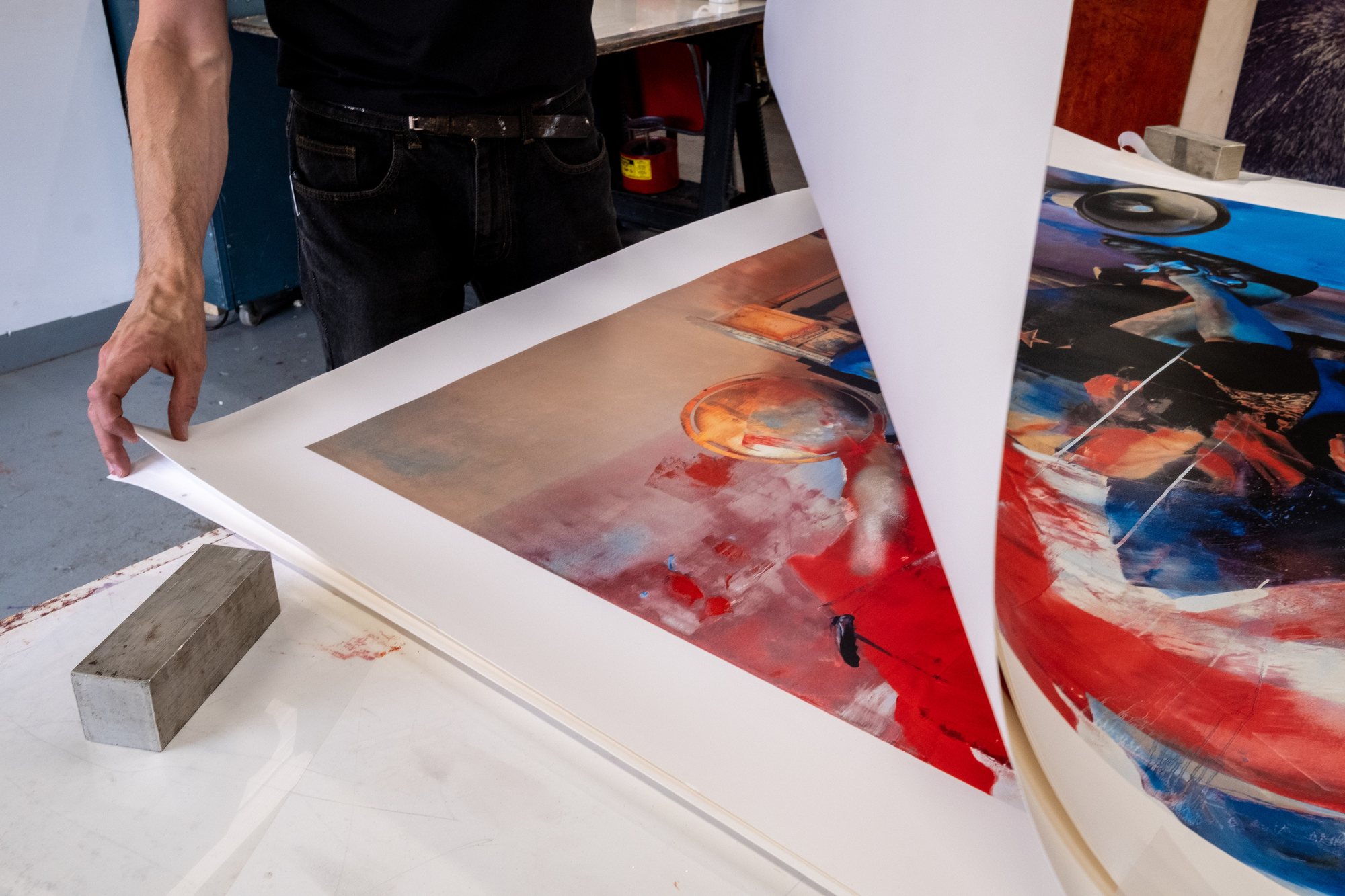
Fine art screen printing
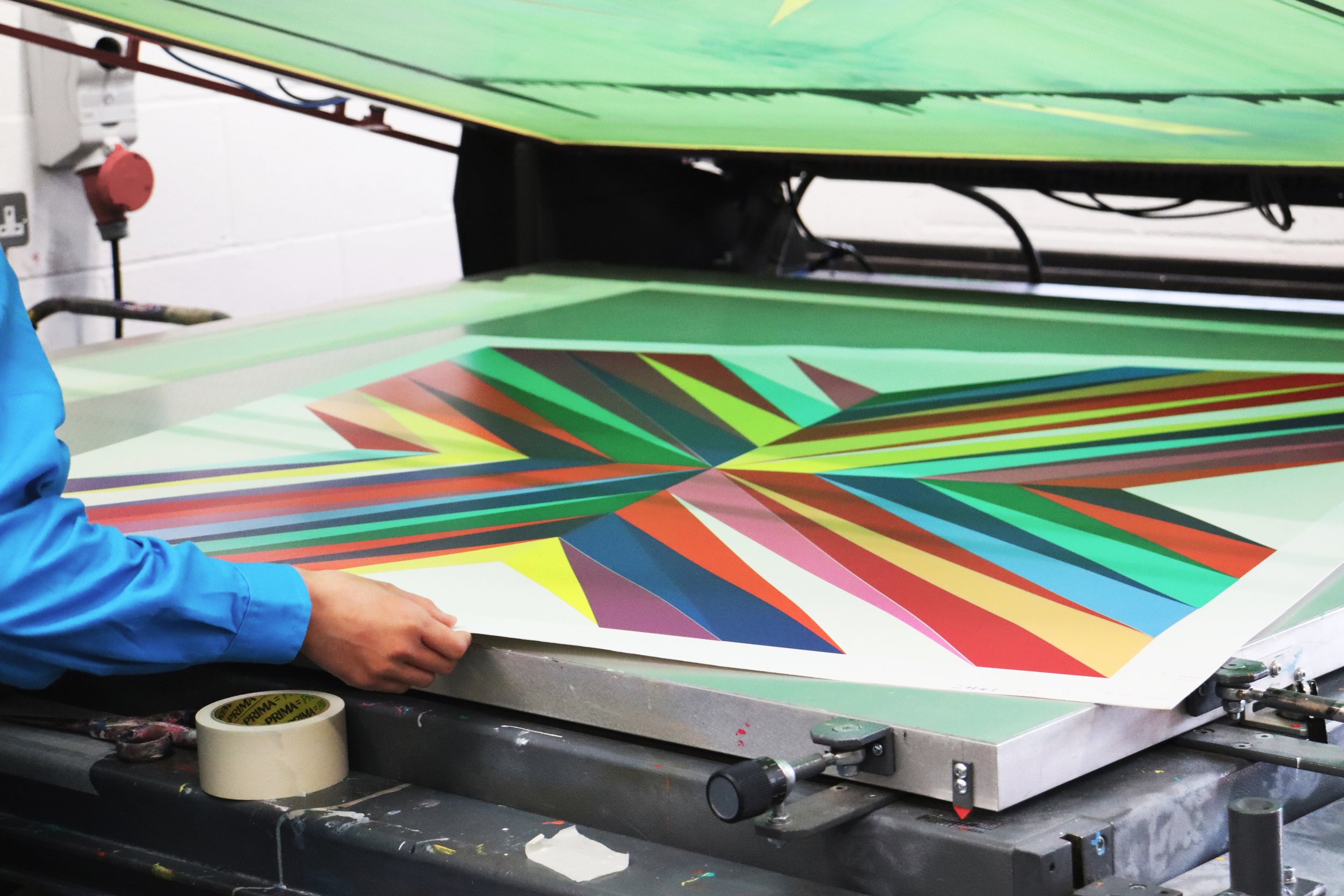
Atelier JI produces screenprint editions for artists, galleries, publishers and institutions. Every project is separated, proofed and editioned in our London studio, from a single flat colour to 39 layered enamels, on paper, canvas, metal or glass.

Firewall was Odita's first major project in silkscreen, debuting at Art Basel Miami Beach. Black Star almost doubled the layers with 64 triangles across 22 colours, 16 of which meet at a central point with no margin for error.
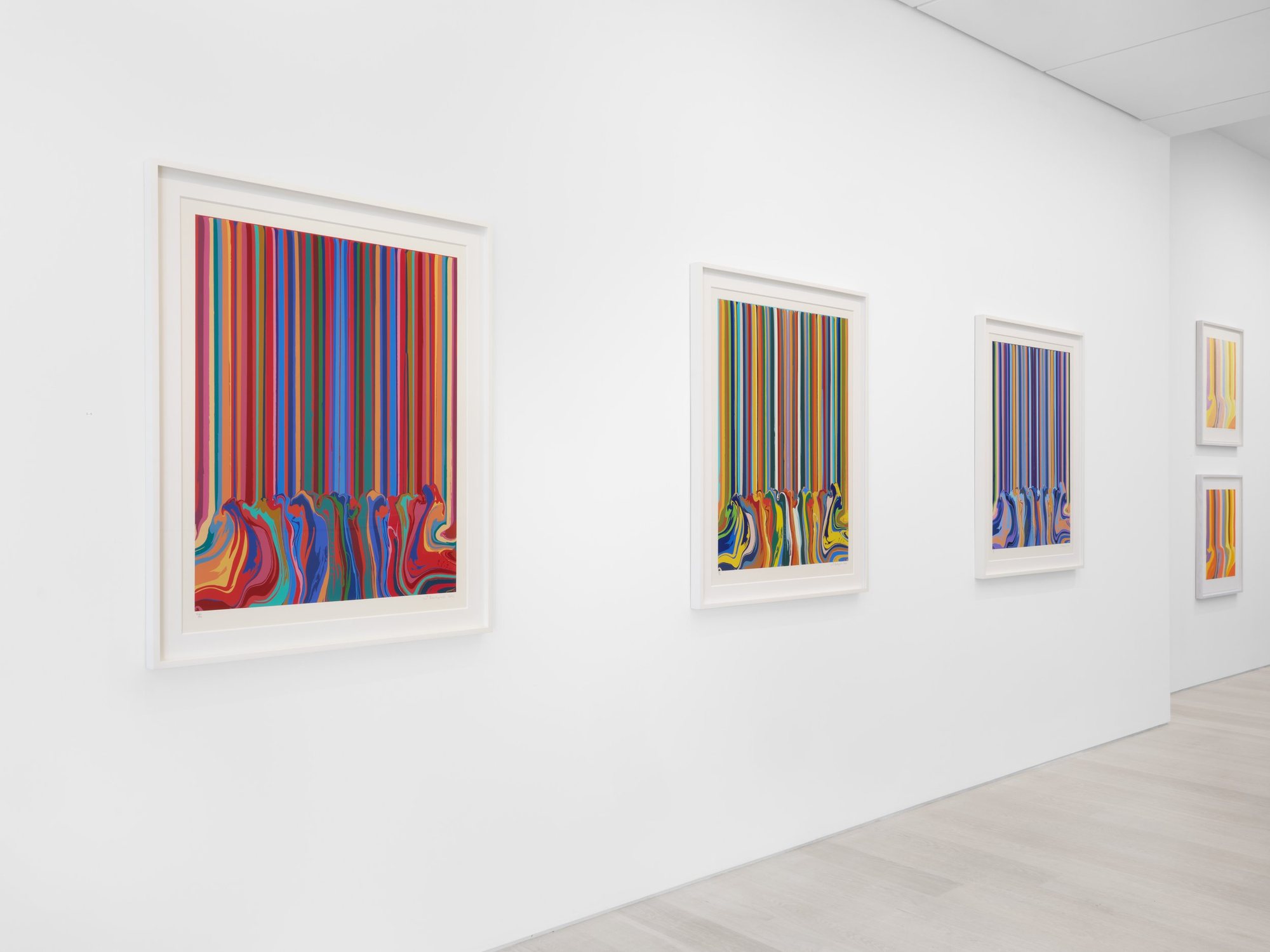
Mirrored Enamel was Davenport's first series in layered enamel inks: 38 colours poured in crisp lines that pool at the foot of the sheet. Pathway built on that process at 1342 × 1640 mm, with 113 colours across the group, for his solo exhibition at Cristea Roberts.
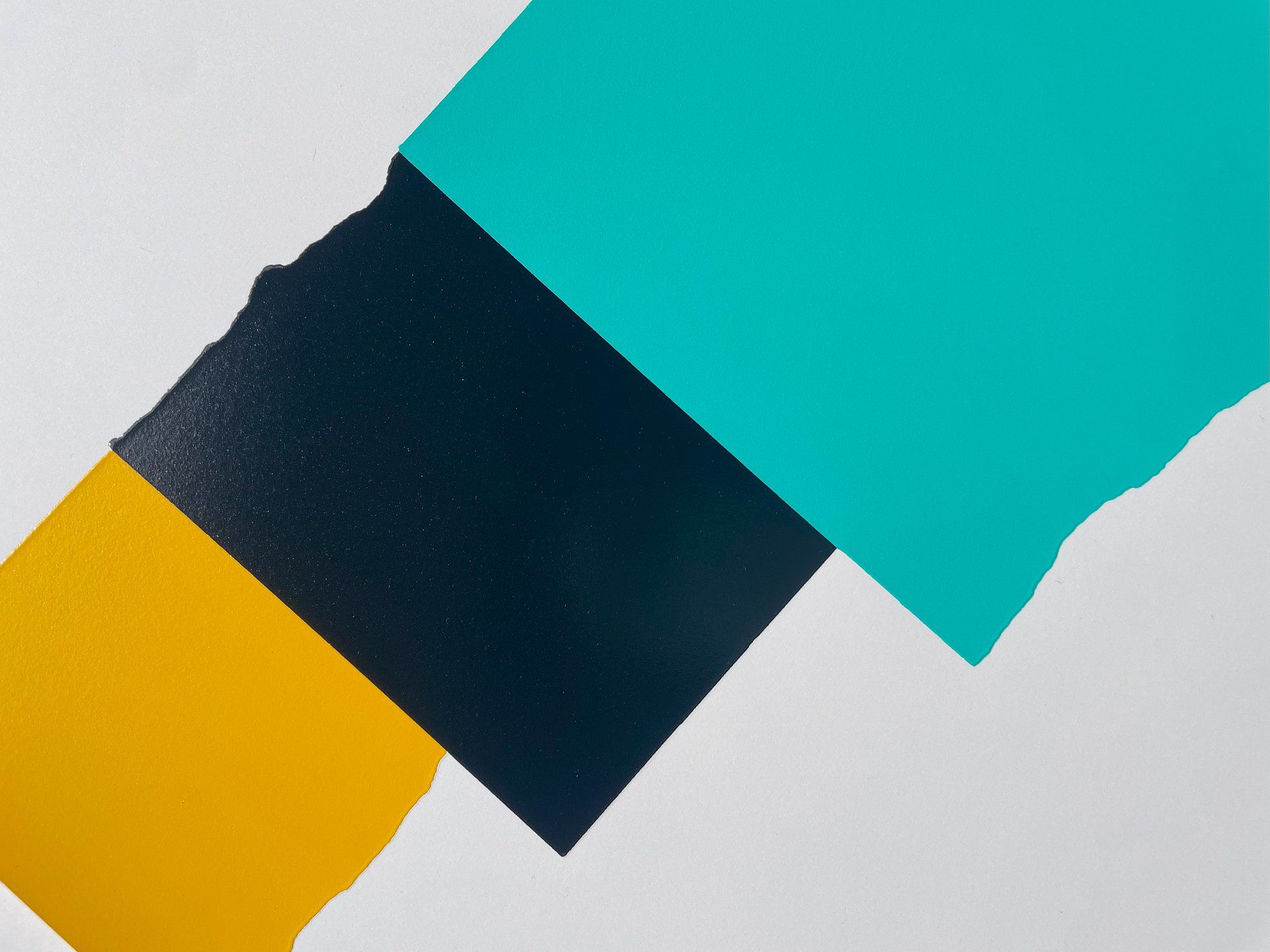
For Tate, we printed Chromoscreen 01 and 02 from Batchelor's Concrete Collage works, with glossy structured inks that sit proudly on the paper like his spray-painted surfaces.

Twelve screenprints, Khan's first in the medium. We developed a high-build layering method to echo the rhythmic stamping of his oil-on-gesso works, pairing vinyl inks that settle into the paper with catalysed inks that sit on top, tested across eight paper stocks before editioning.
Up to 250 × 125 cm in a single pass. Larger images can be seamed from several panels.
No fixed limit on colours. Single prints in Ian Davenport's Pathway group run to 39, with 113 colours across the group.
Trapping held to less than a milimetre across 22 layers, with 16 triangles converging at a signle point on Odili Donald Odita's Black Star.
Vinyl, catalysed and gloss enamel inks, high-build and structured inks, and fluorescent, phosphorescent, iridescent and metallic systems. Custom inks can be mixed from materials the artist supplies.
100% cotton rag papers up to 600gsm, plus handmade and machine-made papers, canvas, acrylic, metal, glass, wood and resin.
Gloss and spot varnishes, diamond dust, glitter, metallic and 22-carat gold leaf, flocking, embossing, and cut or deckled edges.
We discuss the work, scale, edition size, paper and budget, and advise which process suits it best.
Our pre-press team separates the image into tonal layers by hand and outputs film positives, with a digital soft proof before any screens are made. Artists can also draw their own positives.
Inks are mixed in the studio, often matched to painted swatches from the artist, and formulated for the finish the work needs.
We trial papers, ink formulations and printing order, with the artist in the studio or sharing proofs remotely.
The artist approves a final proof, the bon à tirer, which becomes the standard for the whole edition.
Our printers edition the series against the approved proof, checking registration and colour throughout.
Trimming, deckling, collation, signing and numbering preparation, documentation, packing and presentation, including portfolio boxes.
No. They are three names for the same process, in which ink is pressed through a fine mesh screen, one colour at a time. “Serigraph” is more common in the United States. “Screenprint” and “silkscreen” are the usual terms in the UK.
Yes, and much of our work begins this way. We separate the painting into tonal layers by hand, show you a digital proof, and mix inks from your swatches so the edition holds the depth and colour of the original.
Up to 250 × 125 cm in a single pass, and larger by seaming several panels. There's no fixed limit on colours: our most complex editions have run to 39 per print.
Mostly 100% cotton rag papers chosen for archival quality, including Somerset, Arches and Magnani, as well as handmade papers, canvas, acrylic, metal, glass, wood and resin.
Yes. Many artists work alongside our printers in the studio. Galleries and publishers can also review proofs remotely.
Yes. We produce editions for galleries, publishers, institutions and charities, and publish our own editions with artists as Atelier JI.