Monotype and monoprint

Production
Monotype and monoprint

A monotype is printed once. The artist paints, draws or wipes ink directly onto a plate, and we take a single impression that can never be repeated. A monoprint starts from a plate that could be printed again, such as an etching, and is made unique through inking, hand-colouring or collage. Artists work alongside our printers at the press in our London studio.

Unique works with Liorah Tchiprout, Katherine Jones RA and Graham Fink.

Selected projects

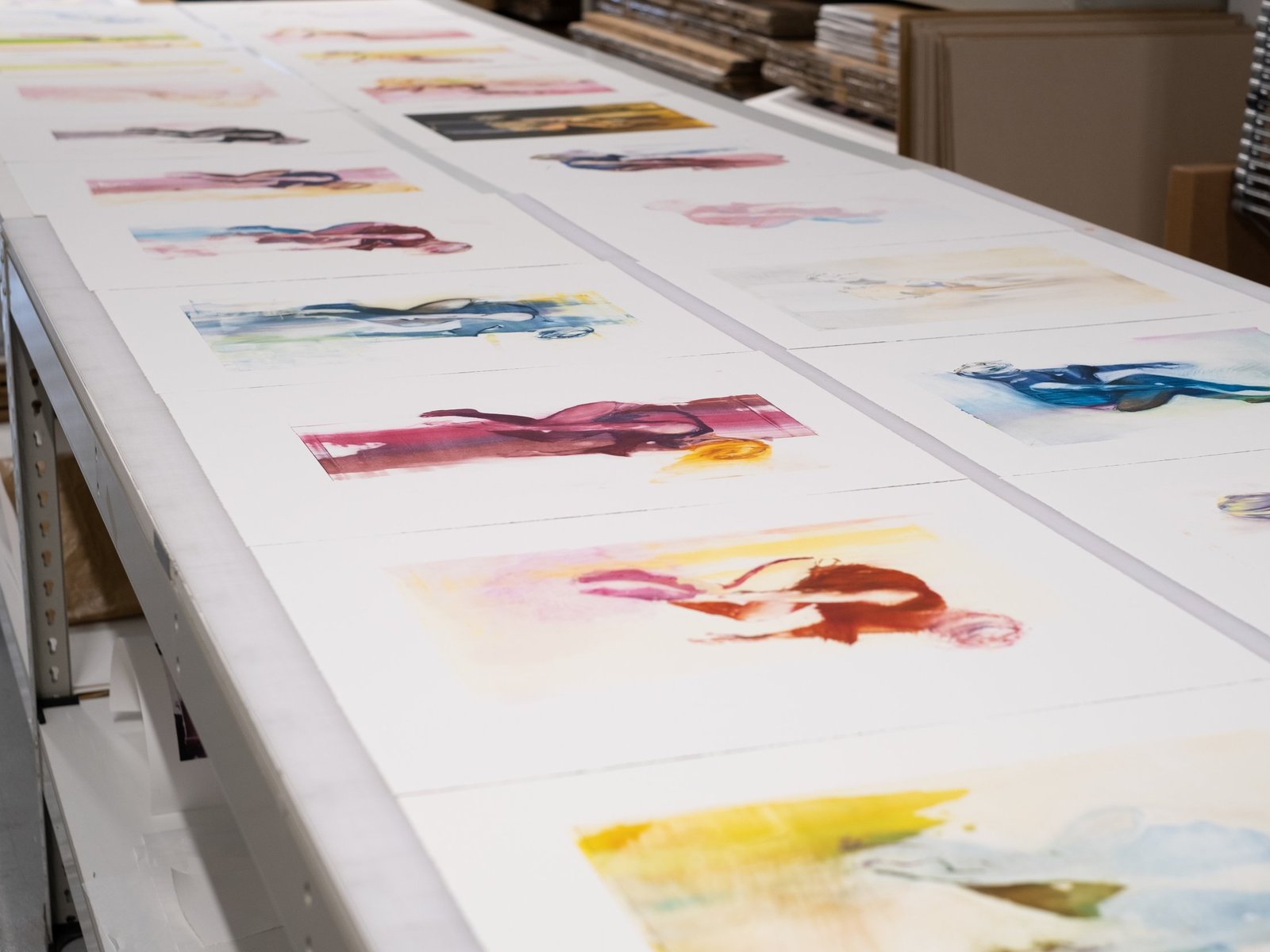
Detail of one of Liorah Tchiprout's monotypes, two figures painted in loose black, yellow and blue strokes
Published by Atelier JI · 2026

Liorah Tchiprout

Etched on all things bright and dark, monotypes

Alongside the twelve etchings of Etched on all things bright and dark, Tchiprout made twenty hand-coloured monotypes in the studio. Ten went into the special-edition box sets, so each of those portfolios is different, and the other ten stand alone. Each was painted straight onto the plate and pulled as a single impression, a counterpoint to the eighteen months of biting and reworking behind the etchings.
Hand-coloured monotype · 348 × 400 mm · 1/1 · Twenty unique works
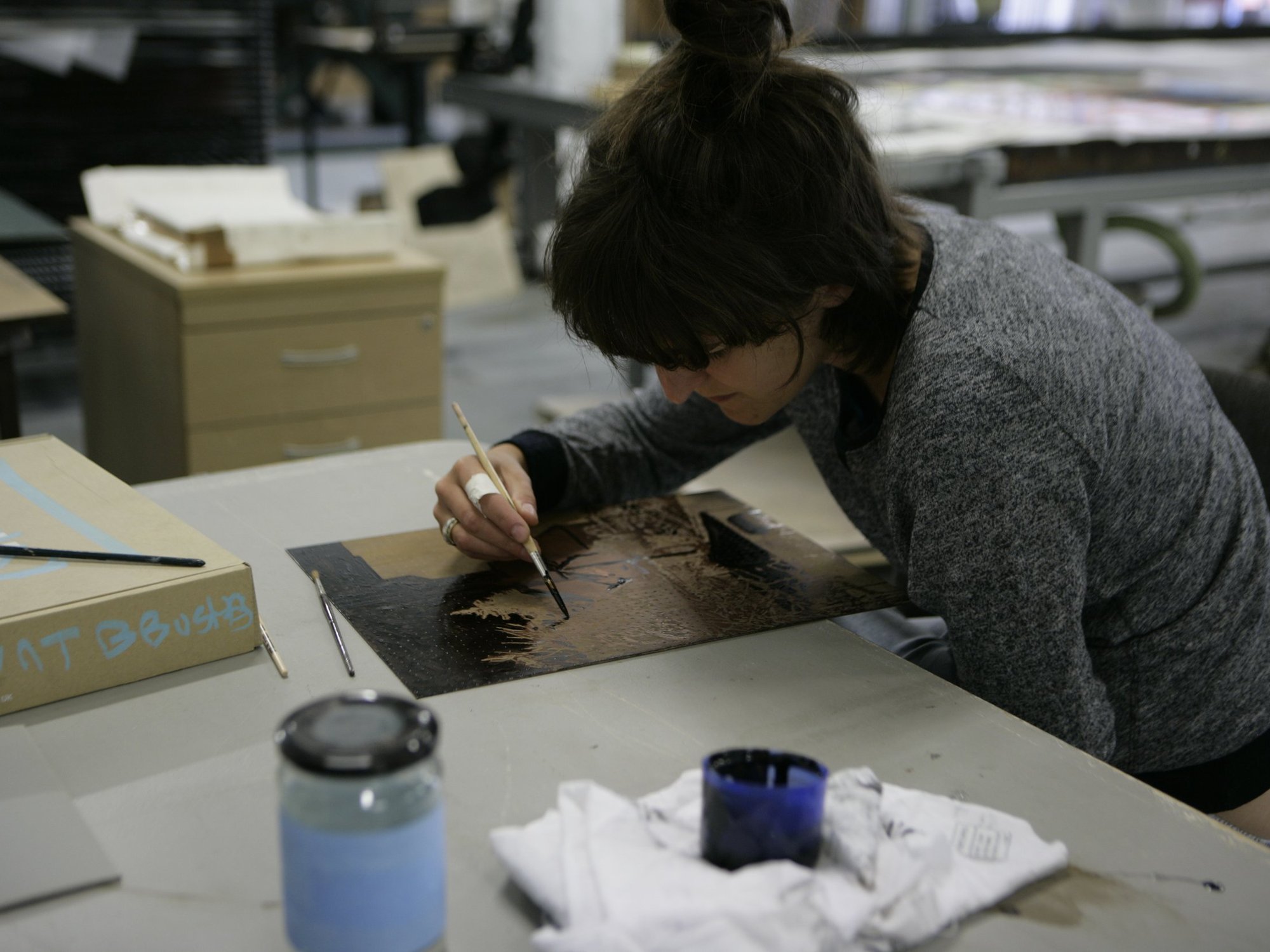
Katherine Jones working ink into a plate with a fine brush at Atelier JI
Published by Atelier JI · 2015

Katherine Jones RA

Boreal Forest, Fortress, Map of Shifting Land and Pool Shell

Four large unique prints, each on a single 1375 × 775 mm sheet. Etching and aquatint are combined with monotype, so no two impressions could match and each work exists as an edition of one.

Etching with aquatint and monotype · Saunders Waterford 425gsm · 1375 × 775 mm · Edition of 1
One of Graham Fink's black and white monotypes, swirling gestural marks building a dense, mountainous landscape
For the artist · 2020

Graham Fink

Pareidolian Army

Fink, one of the world's most awarded creatives, made his first monotypes with us for In Transition at VVA Gallery in 2020. Over two years of sessions, he used the chance marks of the process to explore pareidolia, the tendency to see faces and figures in random patterns.
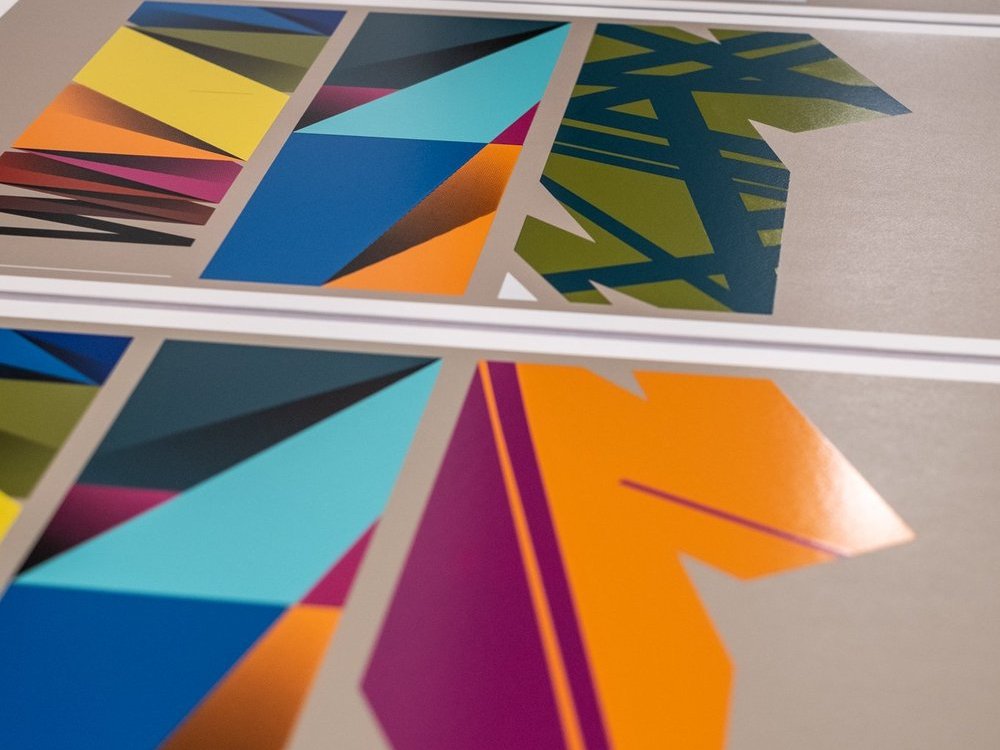
Monotype on Japanese Kozo paper · Series of six

What the studio offers

From a single painted plate to a series of unique works made alongside an edition, combined where needed with our etching and screenprinting processes.

Monotype

Ink, paint, pastel or anything that leaves a mark, worked onto a plate and printed once. Marks can be added or lifted away to draw in light and dark, as on Liorah Tchiprout's twenty monotypes.

Monoprint

A plate that could be printed again, such as an etching or a screen, made unique through selective inking, hand-colouring, chine-collé or collage.

Hand-colouring

Colour added by hand after printing, on a monotype or on an impression from an etched plate.

Combined processes

Monotype layered with etching, aquatint or screenprint, as in Katherine Jones's large unique prints.

Papers

Cotton rag papers such as Saunders Waterford and Arches, and Japanese papers such as Kozo.

Scale

Up to 80 × 140 cm, from intimate works on paper to Katherine Jones's large unique prints.

From plate to print

A monotype is made in the moment, so most of our work is preparation. Plates, papers and inks are ready before the artist arrives, and a printer stays at the press throughout.

01
Consultation

We discuss the work, paper, scale and number of pieces, and whether monotype, monoprint or both suits it.

02
Preparation

We prepare plates, papers and inks in advance, so studio time goes on making.

03
Working the plate

The artist paints, draws or wipes ink onto the plate, with a printer on hand to advise on ink and timing.

04
Printing

Each plate goes through the press once, with pressure and paper set so every mark transfers as intended.

05
Hand-finishing

Colour, drawing or collage can be added after printing, while the image is still fresh.

06
Documentation

Each work is dried flat, signed and recorded as a unique 1/1.

Questions

What is the difference between a monotype and a monoprint?

A monotype is printed from a smooth plate with no fixed image on it, so it can only ever be printed once. A monoprint starts from a plate that holds an image, such as an etching, and is made unique by how it is inked, coloured or collaged.

Is a monotype part of an edition?

No. Each monotype is unique and marked 1/1. A series can share a theme, size and paper, but no two works are the same.

Do I need printmaking experience?

No. Many artists come to monotype from painting or drawing. Graham Fink made his first monotypes with us, and our printers look after the plate, paper and press.

Can monotypes accompany an edition?

Yes. Liorah Tchiprout's monotypes were paired with her twelve-etching suite, one in each special-edition box set, with the rest released as stand-alone works.

Which papers do you use?

Mostly 100% cotton rag papers such as Saunders Waterford and Arches, as well as Japanese papers such as Kozo for a softer, more absorbent surface.

Can I book time in the studio?

Yes. Artists can book full or half-day one-to-one sessions with one of our printers, to experiment at the press or to work towards a series.

Planning a series of monotypes?

Tell us about the work and how you'd like to make it. We'll advise on plates, paper and studio time, and send a quote.

Discuss a project