Etching and intaglio
Production
Intaglio

Intaglio prints come from lines and tones cut or bitten into a metal plate, which is inked, wiped and printed under heavy pressure. We work with artists on etching, aquatint, spitbite, drypoint and polymer gravure, from the first ground on the plate to the last impression of the edition.

Etchings with Liorah Tchiprout, Piers Secunda, Remi Rough and David Shillinglaw.

Selected projects

Gloved hands wiping ink from one of Liorah Tchiprout's etched copper plates at Atelier JI
Published by Atelier JI · 2026

Liorah Tchiprout

Etched on all things bright and dark

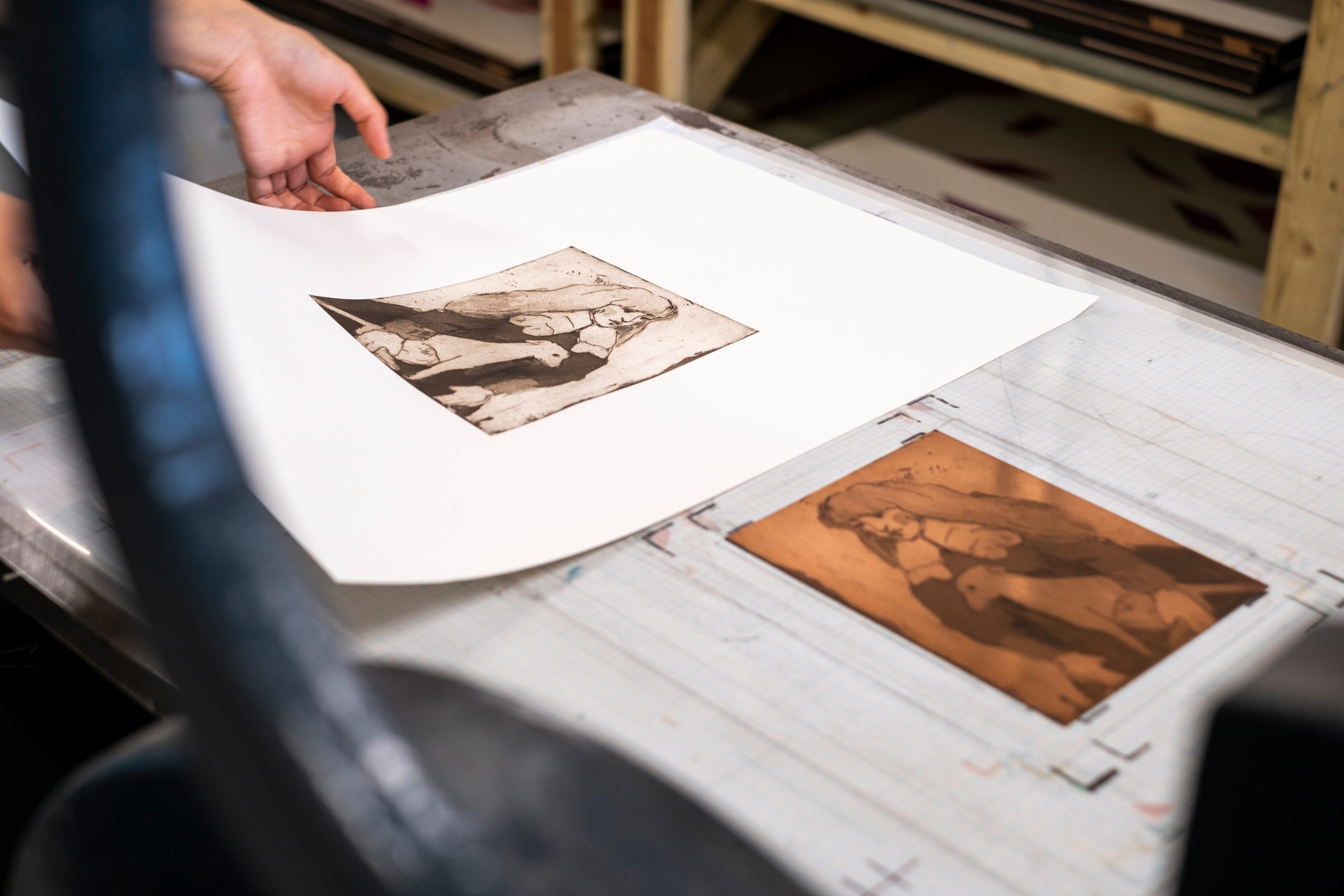
Twelve etchings developed over eighteen months, marking Tchiprout's return to her roots as a printmaker. Plates were drawn, bitten, proofed and returned to the acid until each image resolved. The suite comes in a handmade box debossed in copper, featuring a state proof of the title etching.
Etching with aquatint and spitbite · Arches Aquarelle 300gsm · 348 × 400 mm · Edition of 25 + 3 APs
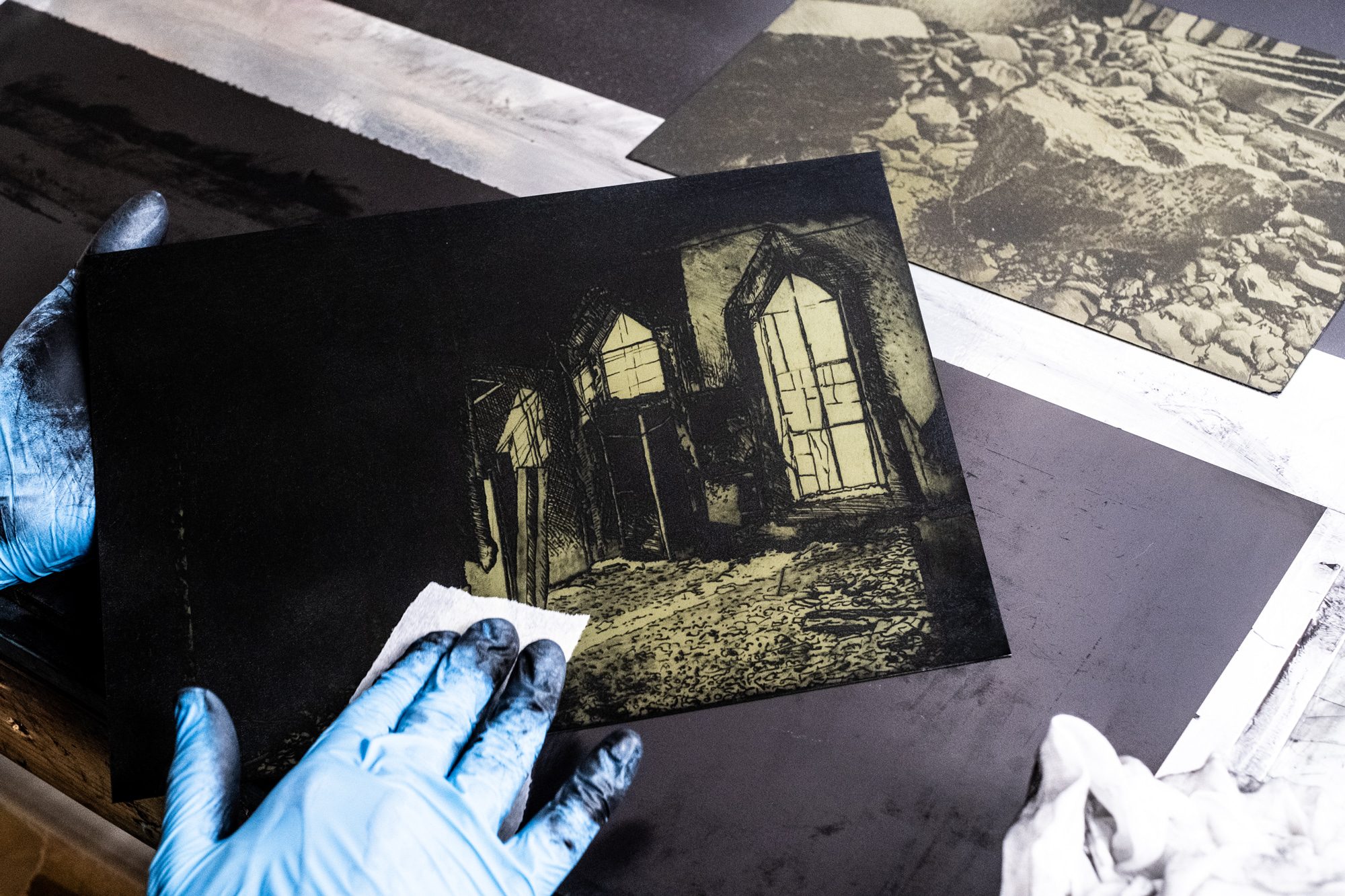
A gloved hand wiping a gravure plate of the Mosul Museum for Piers Secunda's etchings at Atelier JI
Published by Atelier JI · 2022

Piers Secunda

Mosul Museum I–V

Five polymer gravure etchings of the Mosul Museum after its destruction by ISIS, printed in ink made from charcoal Secunda gathered in the burned museum in 2018. He hand-finished every impression in our studio, and each print comes with a vial of the same charcoal.

Hand-finished polymer gravure etching with Mosul Museum ink · Somerset Satin 330gsm · 400 × 320 mm · Edition of 20
Detail of Remi Rough's Style Writer Extraordinaire etching, sharp diagonals of orange, red, blue and black
Published by Atelier JI · 2021

Remi Rough

Style Writer Extraordinaire

Our first project with Rough, made during his residency at the studio, where he drew original artwork for the plates. The etching is printed from three plates in four colours, alongside seven unique monoprints, each in its own colourway.
Four-colour etching from three plates · Somerset Satin 300gsm · 340 × 445 mm · Edition of 25 + 7 unique monoprints
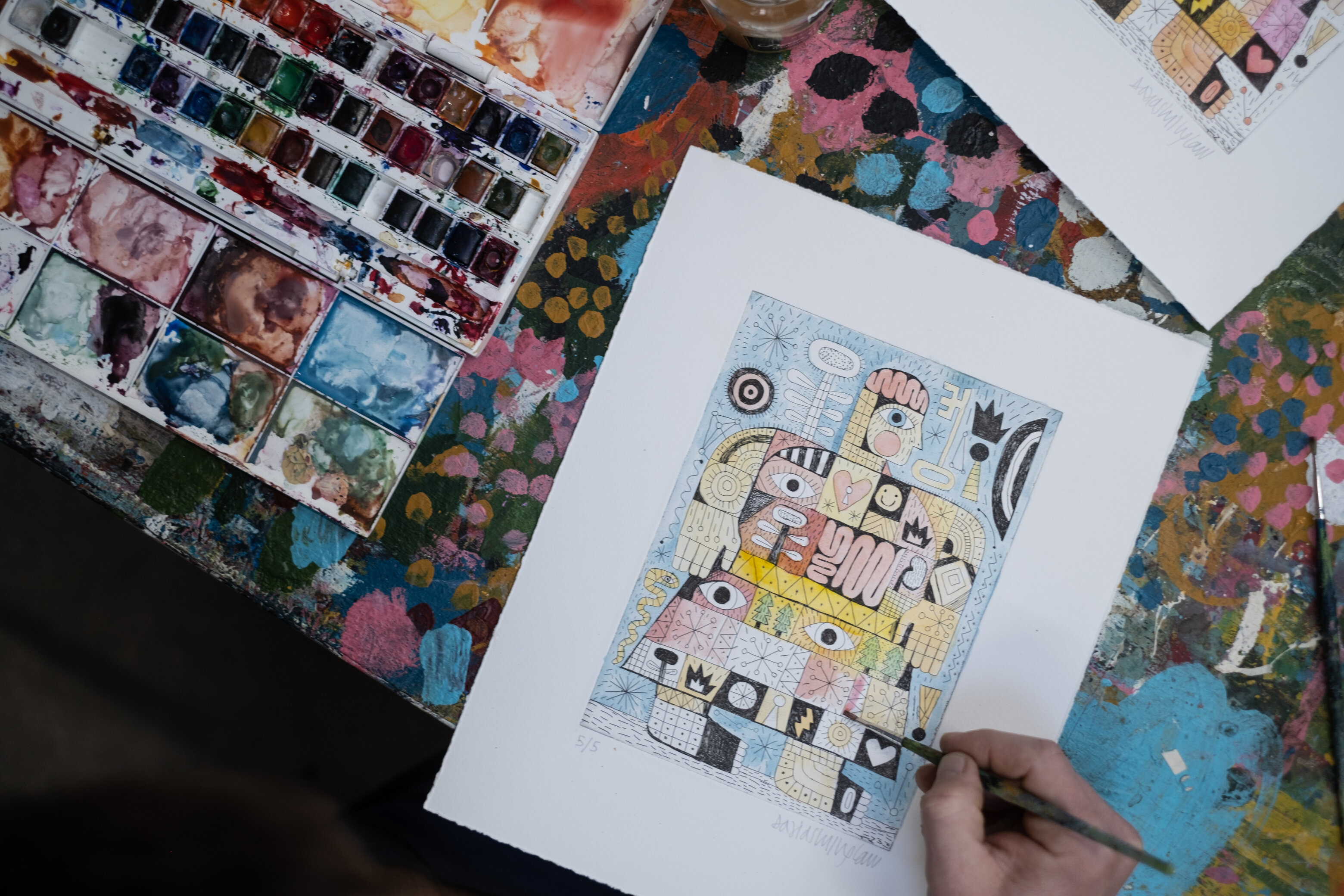
Overhead view of David Shillinglaw hand-colouring a Universal Humanoid etching (5/5) in soft blues, pinks and yellows, beside a well-used watercolour paintbox.
Published by Atelier JI · 2026

David Shillinglaw

The Cosmic Being and The Universal Humanoid

Shillinglaw's first etchings since college, drawn straight onto the plate without planning. Each was editioned in black line, then hand-coloured in five unique variations, a nod to Paul Klee's hand-coloured etchings.
Etching · 250 × 320 mm · Edition of 20 + 5 hand-coloured variations of each

What the studio prints

Traditional techniques used alone or together, and combined where needed with screenprint and monotype.

Etching

Lines drawn through a hard or soft ground and bitten into the plate with acid, as in Liorah Tchiprout's and David Shillinglaw's suites.

Aquatint and spitbite

Tone built from a grain of rosin bitten in stages, with spitbite painted directly onto the plate for washes.

Drypoint and engraving

Lines cut straight into the plate with a needle or burin. Drypoint leaves a burr that prints as a soft, velvety line.

Polymer gravure

Photographs or drawings exposed onto a light-sensitive polymer plate that is inked and printed like an etching, as in Piers Secunda's Mosul Museum.

Colour

Multi-plate colour etchings registered by hand, such as Remi Rough's four colours from three plates.

Hand-colouring and monoprints

Unique variations made from an editioned plate, by hand-colouring or selective inking.

Chine-collé

Thin papers laid down and bonded to the sheet as it passes through the press.

Papers

Cotton rag papers such as Arches Aquarelle, Somerset Satin and Saunders Waterford.

From plate to edition

Etching is built in states: the plate is worked, proofed and worked again until the image is resolved.

01
Consultation

We discuss the work, scale, edition size and paper, and which techniques suit it.

02
Plate-making

The artist draws on the plate in the studio, or we transfer the image photographically.

03
Biting

Plates are bitten in acid, with tone added through aquatint or spitbite.

04
State proofs

We proof the plate, and the artist reworks and re-bites it until the image is resolved.

05
Sign-off

The artist approves the bon à tirer, the standard for the whole edition.

06
Editioning

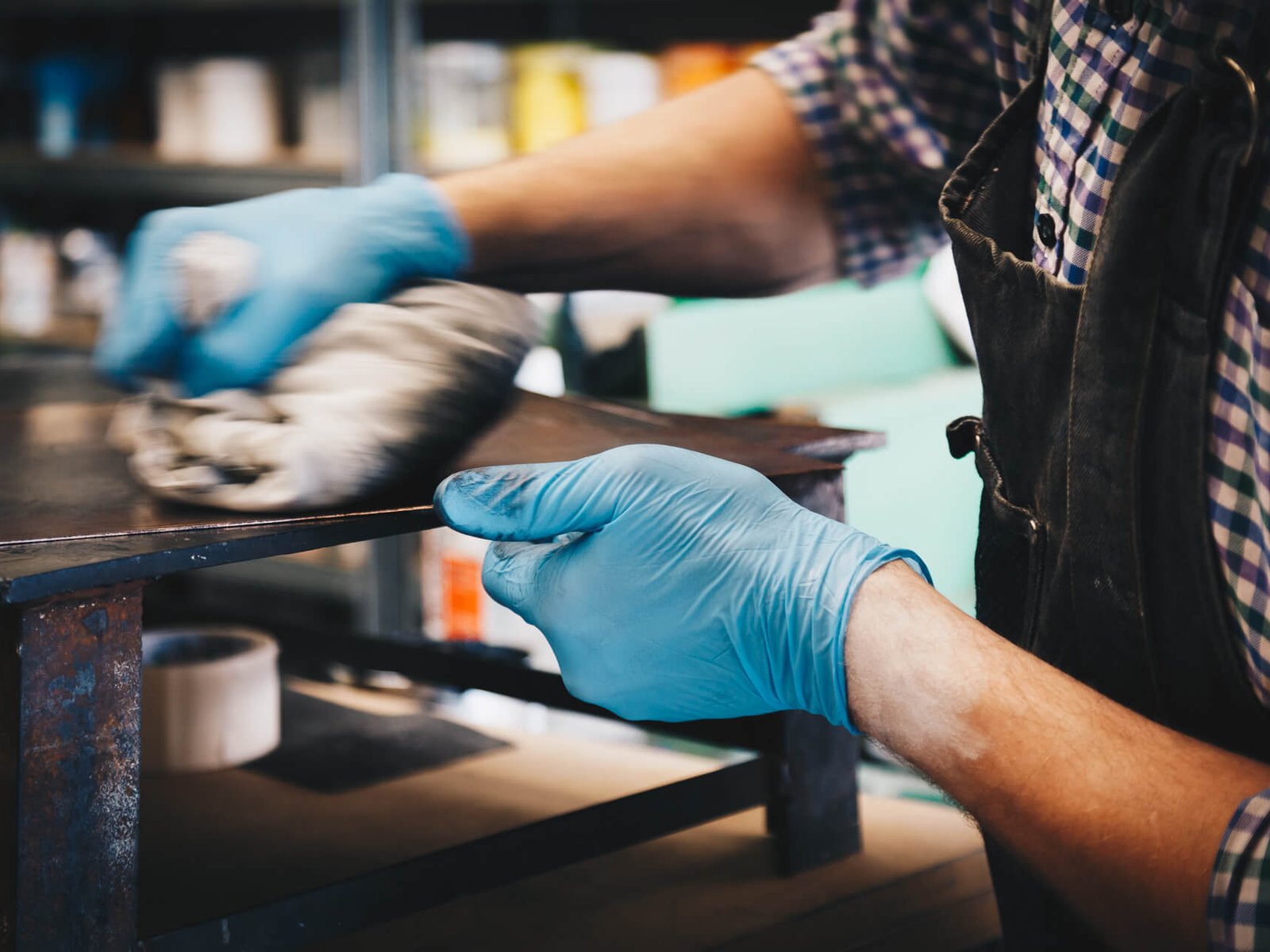
Each impression is inked and wiped by hand, then printed on our etching press.

07
Finishing

Hand-colouring, deckling, signing and numbering preparation, documentation and boxing.

Questions

What is the difference between etching, engraving and drypoint?

All three hold ink in lines below the plate's surface. Etching uses acid to bite the lines, while engraving and drypoint cut them directly. Drypoint's raised burr gives a softer line that wears with printing.

Do I need to have etched before?

No. David Shillinglaw made his first etchings since college with us, and our printers guide every stage from ground to bite to proof.

Can my own materials go into the print?

Yes. Piers Secunda's etchings were printed in ink made from charcoal he collected at the Mosul Museum.

What is polymer gravure?

A photograph or drawing is exposed onto a light-sensitive polymer plate, which then holds ink like an etched plate. It prints with continuous tone and the depth of an etching, as on Piers Secunda's Mosul Museum etchings.

How long does an etching project take?

It depends on the plates and how many states the image needs. Liorah Tchiprout's twelve etchings were developed over eighteen months. We'll give you a timescale with the quote.

How large can you print?

Up to 90 × 180 cm, from small plates to large single sheets.

Can plates be steel-faced for larger editions?

We don't steel-face in house, but we work with specialists who can when an edition needs it.

Planning an etching?

Tell us about the work, the scale and the edition you have in mind. We'll advise on plates, techniques and paper, and send a quote.

Discuss a project